WordPress sites are hacked 13,000 times every single day. That is not an estimate or a worst-case projection. It is what the 2026 data shows, and it works out to roughly 4.7 million compromised sites per year.
Here is the thing most of those site owners did not know before it happened: the problem is almost never WordPress itself.
WordPress core recorded only 6 vulnerabilities in all of 2025. It is one of the most scrutinized, battle-tested codebases on the internet.
The risk lives in outdated plugins, abandoned themes, and weak login credentials, and every one of those is something you can fix without writing a single line of code.
This guide covers what the 2026 threat landscape actually looks like, a plain-English checklist to harden your site starting today, an honest comparison of the best security plugins, what professional security actually costs, and a step-by-step recovery plan if your site has already been compromised.
There is no doubt that WordPress is the most popular Content Management System.
A study by Netcraft and WordPress.com reveals that the CMS is now powering over 35% of the internet.
WordPress has enjoyed a significant user base due to its versatility that has allowed for its deployment on all types of websites, be it small personal blogs, small and large ecommerce websites, and other organizations’ websites
WordPress cannot be said to be a safe haven with its popularity and the convenience that it offers to If you are using WordPress or considering using it as your Content Management System, you have to be concerned about the security threats attached to it.
Hackers have a goal of accessing your WordPress site.
They will stage brute force attacks, carry out SQL injections, and gather your sensitive data through malware injections.
You might be the one giving a leeway for the hackers to attack your WordPress website.
For instance, if you are using weak passwords, failing to carry out regular updates to your WordPress themes and plugins, or using poor hosting providers.
These are the simple things that can really compromise your WordPress website’s security and make it vulnerable to hackers.
Proper security measures should be installed to ensure the utmost security of your WordPress website.
Key Takeaways
- Most WordPress hacks come from outdated plugins and themes, weak or reused passwords and brute-force login attempts, not WordPress core itself.
- Start with the basics: update everything, use strong unique passwords with two-factor authentication, and keep regular off-site backups.
- A security plugin such as Wordfence, Sucuri, Solid Security or MalCare adds a firewall, malware scanning and login protection.
- If your site is hacked, put it in maintenance mode, back it up, scan it, replace core files, clean the database and reset every password before going live again.
The State of WordPress Security in 2026
The numbers from the Patchstack State of WordPress Security 2026 whitepaper are worth sitting with for a moment.
In 2025, researchers discovered 11,334 new vulnerabilities in the WordPress ecosystem. That is a 42% increase from 2024, and more high-severity vulnerabilities were found that year than in the previous two years combined.
The pace is accelerating, not slowing down.
But the most important number in the report is this one: the median time from the moment a vulnerability is publicly disclosed to the moment attackers begin exploiting it at mass scale is five hours. Not five days. Five hours.
That window changes what good security actually looks like. The old advice of “just keep things updated” is still correct, but it is no longer enough on its own.
Updates typically come out days or weeks after a vulnerability is disclosed.
In the five-hour window between disclosure and mass exploitation, your site needs a firewall layer that can block exploit attempts automatically, without waiting for you to click “update.”
A few more figures to put the risk in context:
- 91% of vulnerabilities are in plugins and themes, not in WordPress core
- 43% of new vulnerabilities require zero authentication to exploit: attackers do not need your password
- 46% of vulnerabilities are disclosed publicly before any patch exists
- Standard shared hosting defenses block only 26% of active exploits
The reassurance buried in those statistics is real. WordPress core is not the problem. Plugins are. And the plugin problem is solvable.
How WordPress Sites Actually Get Hacked
Understanding the mechanics makes the prevention obvious. These are the four main ways sites get compromised in 2026.
Outdated plugins
This is the primary cause of WordPress compromises, accounting for 91% of the exploitable vulnerabilities in the ecosystem. Attackers do not target you specifically.
They run automated scanners across millions of sites looking for specific plugin version numbers.
When your site advertises version 3.14.1 of a plugin that has a known SQL injection flaw in it, the bot queues up the attack. Updating to 3.15.0 closes the door before the bot knocks.
A real 2026 example: Avada Builder, a page builder plugin with over one million active installations, had two critical vulnerabilities disclosed on March 24 and 25, 2026.
One was an arbitrary file read flaw, the other was an SQL injection vulnerability.
A full patch was not available until May 2026, leaving sites running the unpatched version exposed for nearly seven weeks.
Site owners who updated the moment patches arrived minimized their window. Site owners who had a virtual patching layer (more on this below) had protection even before the official fix landed.
Brute-force login attacks
The WordPress login page sits at /wp-login.php on every default installation in the world. Automated bots hammer it continuously, cycling through credential combinations thousands of times per second.
Weak passwords, reused passwords, and admin usernames like “admin” are what turn those attempts into successful logins. Two-factor authentication stops this attack even when a password is guessed correctly.
Credential stuffing
Many WordPress administrators use the same email and password they use on other websites.
When those credentials surface in a data breach somewhere else, they get tested automatically against WordPress admin panels.
This is called credential stuffing, and it requires no sophistication from the attacker.
Using a unique password for your WordPress account, stored in a password manager, eliminates this vector entirely.
AI-enhanced attacks
Security researchers documented a meaningful shift in 2025: attackers are now using AI tools to make automated attacks harder to detect and block.
AI can rewrite cross-site scripting payloads in real time to bypass signature-based filters, generate novel SQL injection variants, and analyze token generation patterns to forge requests.
Patchstack’s 2026 whitepaper also flags AI-generated plugin code as an emerging attack surface:
approximately 45% of code produced by current AI coding tools contains security flaws, and that code lives outside the normal plugin update channels entirely.
Signature-based defenses that match known attack patterns are becoming less reliable as a sole layer of protection. This is why the security approach in this guide is layered: firewall plus malware scanning plus strong authentication.
Signs Your WordPress Site Has Been Hacked
Most site owners discover a compromise from a visitor complaint or a Google warning, not from catching it early. Knowing what to look for changes that.
Check for these warning signs:
- Google Search Console shows a security issue notice or “Site may be hacked” label in your property
- Visitors report being redirected to unfamiliar websites
- Your search engine listings show page titles or descriptions you did not write
- New administrator accounts appear in wp-admin that you did not create
- Your hosting provider suspends the account and cites malware or spam
- Site speed drops significantly or server resource usage spikes without a clear cause
- Browsers display a “This site contains harmful programs” or “Deceptive site ahead” warning
- Customers or contacts report receiving spam emails from your domain
- Unexpected files appear in your WordPress root directory or wp-content folder
- Antivirus software flags your URL
One of the most insidious infection types is cloaking.
The compromised site shows perfectly normal content to human visitors, but serves spam-packed pages to search engine bots.
A WordPress security issue can become an SEO problem long before the website looks obviously hacked, says Ashot Nanayan, founder of B2BSEO.io.
Injected pages, spam links, redirects, or cloaked content can get crawled and indexed while the site still looks completely normal to the owner.
I’d monitor Google Search Console alongside your security tools, because unusual indexed pages, sudden ranking drops, or security warnings can sometimes be the first sign that something is wrong.
Site owners often have no idea anything is wrong until Google penalizes the site and organic search traffic collapses over a period of weeks.
By then, the injected spam links may have been indexed for months. Catching this early requires periodic checks of your Google Search Console security report, not just looking at the site yourself.
If any of your visitors report being redirected to an unknown site from your URL, they can verify whether that destination is a known scam at Scaminfo.ai before interacting with it further.
Your WordPress Security Checklist (No Coding Required)
These steps are organized by how much time they take and how much risk they eliminate. Start at the top.
Tier 1: Do these first (under one hour)
1. Update everything right now
WordPress core, every active plugin, every active theme. If something has an update available, apply it today. This single action closes more attack surface than anything else on this list.
Security researchers publicly disclose vulnerability details when they release patches, which means attackers know exactly what to target on unpatched sites the moment a patch goes public.
2. Delete plugins and themes you are not using
Inactive plugins are still exploitable.
If you installed something to test it and never used it, delete it entirely, not just deactivate it. Same for any themes that are not your active theme, with the exception of one default WordPress theme kept as a fallback.
3. Install a security plugin
A firewall and malware scanner is the baseline. The plugin comparison section below covers the main options. Install one before moving on to anything else in this list.
4. Enable two-factor authentication for all admin and editor accounts
Two-factor authentication (2FA) means that even if your password is stolen, an attacker cannot log in without a second verification code from your phone.
WordPress does not include 2FA by default. Use a plugin such as WP 2FA or the 2FA module bundled in most security plugins.
Make it mandatory for every account with administrator or editor access, including any accounts held by contractors or agencies.
Tier 2: Harden the site (one to two hours, plugin-assisted)
5. Change your login URL
Moving your login page away from /wp-login.php eliminates the automated bot traffic targeting that path.
Any security plugin worth using (Solid Security, WPS Hide Login) handles this in one click with no configuration needed.
6. Limit login attempts
Lock out an IP address after three to five failed login attempts. This stops brute-force attacks without any technical intervention on your part. It is a toggle in most security plugins.
7. Set up regular off-site backups
Store backups somewhere other than your hosting account. If your server is compromised, an on-server backup is also compromised. Reliable options:
UpdraftPlus (free tier backs up to Google Drive or Dropbox), BlogVault, or Jetpack Backup. Test a restore at least once after setup, because an untested backup cannot be relied on when you actually need it.
8. Force HTTPS across the entire site
Most hosts now provide free SSL certificates through Let’s Encrypt, available with one click from your hosting dashboard. Forcing all traffic to HTTPS encrypts data in transit and is a minor Google ranking signal.
If your site still serves any pages over HTTP, this is worth fixing today.
Tier 3: Additional hardening (30 minutes)
9. Protect your wp-config.php file
The wp-config.php file contains your database credentials. If it is readable by an attacker, they have complete access to your database. Most security plugins protect this automatically during their setup wizard.
Confirm it is covered.
10. Disable the built-in code editor
WordPress includes a code editor under Appearance > Theme Editor and Plugins > Plugin Editor. If an attacker gains admin access, this hands them direct code execution on your server.
Disable it by adding one line to your wp-config.php file: define(‘DISALLOW_FILE_EDIT’, true);. Alternatively, most security plugins offer a toggle for this in their dashboard.
11. Use a unique, strong password for every account
Use a password manager (1Password, Bitwarden, and similar tools are free or low cost) to generate and store unique passwords for your WordPress admin, hosting control panel, domain registrar, and any connected email accounts.
Password reuse is one of the most common entry points attackers use, and it is entirely preventable.
The Best WordPress Security Plugins in 2026
There is no single best plugin for every situation. The right choice depends on your hosting environment, your budget, and whether your priority is prevention, detection, or cleanup.
Here is an honest look at the main options.
Wordfence
Wordfence is the most widely installed WordPress security plugin, with over 5 million active installs.
The free version is genuinely capable: it includes a web application firewall, malware scanner, brute-force protection, two-factor authentication, and live traffic monitoring.
The one thing to understand about the free tier: firewall rules and malware signatures are pushed to free users 30 days after they are released.
Given that 45% of vulnerabilities are exploited within 24 hours of disclosure, that 30-day gap is real. The premium version ($149/year) provides real-time rule updates.
Wordfence runs on your server, so its malware scans consume server resources.
This can be noticeable on low-tier shared hosting plans but is rarely an issue on managed WordPress hosting or VPS environments.
Best for: Single-site owners who want a feature-rich free option and can supplement it with good update habits.
Sucuri
Sucuri uses a cloud-based architecture: traffic passes through Sucuri’s servers before reaching your WordPress install, so malicious requests are filtered upstream before WordPress even loads.
This reduces server load significantly and provides strong protection against large-scale bot and DDoS traffic.
The free Sucuri plugin is more limited than Wordfence’s free version. The paid platform ($200/year) is where the real value is:
it includes a web application firewall, CDN, malware scanning, and professional malware removal by Sucuri’s team if your site is compromised.
That last feature is what distinguishes the paid tier for businesses that cannot afford extended downtime or do not want to handle cleanup themselves.
Best for: Sites that want professional incident response included in the subscription, or sites under frequent automated attack pressure.
Solid Security (formerly iThemes Security)
Solid Security has the most approachable setup of the three.
Two features stand out. First, passkeys: it supports biometric login (Face ID, Touch ID, Windows Hello) for WordPress, which is ahead of the other options.
Second, Patchstack virtual patching: this automatically applies a temporary firewall-level block for a known vulnerable plugin even before the plugin developer releases an official patch.
That virtual patching feature directly addresses the 46% gap: nearly half of disclosed vulnerabilities have no patch available when they go public.
A virtual patch cannot fix the underlying code flaw, but it can block the exploit attempt at the firewall level while you wait for the official update.
Best for: Non-technical site owners who want the easiest onboarding and the most future-proof login security.
MalCare
MalCare is specialized in malware detection and removal rather than prevention.
It uses off-server scanning, meaning the scan workload runs on MalCare’s infrastructure rather than your hosting account, so it does not slow down your site. It includes a one-click malware removal feature that works without requiring manual file editing or FTP access.
Best for: Sites that have already been hacked and need cleanup handled without developer involvement, or site owners who prioritize fast, clean removal over comprehensive firewall coverage.
Quick guide: which one fits your situation
- Just starting out, want solid free protection: Wordfence free
- Want human cleanup included if things go wrong: Sucuri paid
- Non-technical, want the easiest setup: Solid Security
- Already hacked and need cleanup handled: MalCare or Sucuri emergency service
What WordPress Security Actually Costs in 2026
The commercial keyword “wordpress security services” has a $8.00 cost-per-click in paid search. That tells you businesses are actively shopping for this. Here is the honest pricing landscape.
Security plugin subscriptions
- Wordfence Premium: $149 per year
- Sucuri full platform (WAF, scanning, professional malware removal): $200 per year
- Solid Security Pro: around $99 per year
- MalCare: pricing starts around $99 per year
- Jetpack Security (includes backups): $240 per year
Professional one-time hardening
A security professional can audit and harden a WordPress site (file permissions, 2FA setup, firewall configuration, login URL change, wp-config protection, SSL verification) in a single engagement.
Typical cost: $150 to $500 flat rate, depending on the provider and site complexity.
Ongoing managed security
Entry-level managed security or maintenance plans run $40 to $80 per month and typically include daily backups, monthly plugin updates, uptime monitoring, and basic security scanning.
Mid-market plans at $80 to $200 per month add staging environments, more frequent updates, performance monitoring, and a block of included developer hours.
The cost of doing nothing
The average total recovery cost for a small business after a WordPress hack is $14,500. That figure covers malware removal fees, emergency developer time, lost revenue during downtime, and the SEO recovery work required to undo injected spam links and clear a Google blacklist penalty.
The SEO damage alone can take three to six months to reverse, depending on how long the infection ran undetected.
A $149/year premium security plugin against $14,500 in average recovery costs is one of the more straightforward return-on-investment calculations in small business software.
My WordPress Site Was Hacked: What to Do Right Now
If your site has already been compromised, do not panic, and do not start deleting files before you have a plan. Rushed cleanup attempts frequently miss backdoors, and the infection returns within days.
Step 1: Put the site in maintenance mode
Block public access via your hosting control panel or a maintenance plugin. This stops visitors from being exposed to compromised pages and prevents search engine bots from crawling more spam while you work.
Step 2: Take a full backup, even of the infected version
Before touching anything, back up the entire site including the database. If you accidentally delete something critical during cleanup, this infected backup is your only recovery point for those files.
Step 3: Scan with a malware scanner
Run Wordfence, MalCare, or Sucuri SiteCheck. Wordfence compares your files against clean, verified copies from the WordPress repository and flags anything that does not match.
MalCare does the same scanning off-server without the resource load. Run at least one of these before making any changes.
Step 4: Replace core WordPress files
Download a fresh copy of WordPress from wordpress.org. Using FTP or your host’s File Manager, delete and replace the wp-admin and wp-includes folders entirely with the fresh versions.
Do not touch wp-content: your themes, plugins, and uploads live there.
Step 5: Clean the database
Malware is frequently injected into the WordPress database, not just into files.
Common locations: the options table (often contains injected redirect code), user meta, and post content. Look for unfamiliar administrator accounts, base64-encoded strings in unexpected places, and redirect URLs you did not add.
A plugin like WP-DBManager or the database scan in MalCare can assist here.
Step 6: Reset every password and remove backdoors
Reset: your WordPress admin password, hosting control panel password, SFTP password, database password, and any email accounts connected to the site.
Remove any administrator users or FTP accounts you did not create. Attackers frequently create hidden admin accounts as a re-entry backdoor, so check the full user list carefully.
Step 7: Update everything
WordPress core, every plugin, every theme. Delete any plugins or themes that are not in active use.
Step 8: Run two scanners after cleanup
Wordfence and Sucuri SiteCheck returning clean together is a strong signal the site is safe to bring back online. Using two independent tools reduces the risk of a missed infection.
Step 9: Request Google’s review if you were blacklisted
If Google flagged your site: Google Search Console > Security Issues > Request a Review. Google typically responds within a few days once the site is genuinely clean.
Submit the review only after the site is clean, because failed review requests add waiting time to the next attempt.
When to hire a professional
If the infection returns after cleanup, if you cannot identify infected files through scanning, or if you do not have FTP or database access, stop attempting DIY cleanup.
Sucuri, MalCare, and Wordfence all offer paid cleanup services in the $199 to $500 range.
That cost is almost always lower than the compounding damage from repeated failed cleanup attempts combined with ongoing SEO penalties.
WordPress Security News: What Changed in 2026
For site owners who want to stay current, here is what the first half of 2026 actually looked like.
WordPress shipped three security patches in under 30 hours (March 2026)
Between March 10 and 11, 2026, WordPress released three rapid-fire updates: versions 6.9.2, 6.9.3, and 6.9.4. The first release patched a critical path traversal vulnerability and an XML external entity injection flaw.
It also broke a number of sites. An emergency fix followed five hours later. The next evening, a third release went out because, in the WordPress Security Team’s own statement, “not all of the security fixes were fully applied” in the previous releases.
The sequence was unusual in its speed and its turbulence.
It illustrated both how seriously the WordPress core team takes security response and why having tested backups in place before major updates matter.
Avada Builder: one million sites, seven weeks of exposure (March to May 2026)
Wordfence researchers disclosed two critical vulnerabilities in Avada Builder on March 24 and 25, 2026: an arbitrary file read flaw and an SQL injection vulnerability.
The plugin has over one million active installations. A full patch was not available until May 2026, leaving sites running the plugin exposed for approximately seven weeks between disclosure and fix.
This is the 46% statistic made concrete.
Nearly half of all disclosed vulnerabilities go public before a patch exists. Avada Builder is not an obscure plugin; it is one of the most-installed page builders in the ecosystem. The only complete protection during the gap was a virtual patching layer at the firewall level.
AI-assisted attacks entered the mainstream
The 2026 Patchstack whitepaper documented a trend that security researchers had been tracking since mid-2025: attackers are using AI tooling to generate attack payloads that evade traditional signature-based defenses.
This includes rewriting cross-site scripting code to bypass filters, generating novel SQL injection patterns, and analyzing authentication token generation to forge requests.
The practical implication: defenses that rely purely on matching known attack signatures are less reliable than they were two years ago.
Behavioral anomaly detection (identifying that something unusual is happening, even if it does not match a known pattern) is becoming a more important layer.
WordPress Security Tips
This article has explained the WordPress security tips that can be used to protect your WordPress website:
Keep Your WordPress Core, Themes, and Plugins Updated
It is essential to do routine upgrades of the WordPress core, themes, and plugins to keep your website’s security in top shape. Updates are frequently released by developers to resolve security flaws and make the system more secure overall.
If you choose to ignore these updates, your website may become vulnerable to various dangers. Scott Dodson, Chief Growth Officer at Ling App suggests “An easy yet highly effective security strategy is making sure that your WordPress installation, themes, and plugins are all updated to the most recent versions.
Hackers frequently take advantage of known flaws in older software; therefore, it is necessary to keep everything up to date to prevent security breaches.”
Choose a Good Hosting Company

Hosting companies play a very crucial role in the security of WordPress websites.
The hosting provider that you choose can make or break your WordPress website. The web hosting provider is like the heartbeat of your WordPress security.
Some of the security roles that a good hosting company will play are:
- Regularly monitoring your networks and digital resources against intrusions or unauthorized accesses.
- The hosting provider will protect your WordPress website against small scale and large scale DDoS attacks.
- The hosting company will keep both your hardware and software up to date so as to ensure that cyber attackers do not take advantage of loopholes and vulnerabilities that existed in old versions.
- The hosting provider will deploy a data recovery mechanism in case of a cyber-breach.
- The hosting company will carry out regular file scans to detect and remove malware that could paralyze your WordPress website.
Still, on the web hosting provider’s issue, I greatly discourage you from using a shared hosting platform to share server resources with many other.
It opens you up to cyber risks. A hacker can easily use a neighboring site to stage an attack on your own website.
I recommend using a managed WordPress hosting service, which is a more secure platform for your WordPress website.
You will enjoy some advanced security configurations that will keep your WordPress safe and secure from hackers.
If you want to choose the best WordPress hosting company, we have made it easier, take a look at our comprehensive article an WordPress hosting services: Best WordPress Hosting Services
Install a SSL Certificate
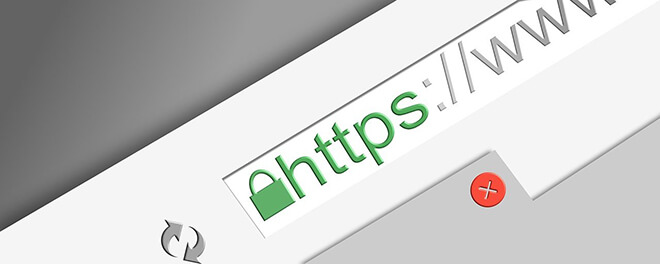
SSL stands for Secure Sockets Layer.
When installed on a website, the certificate will allow for HTTPS encryption.
Without the SSL certificate, the communication between the servers and the browsers will happen over the HTTP protocol.
The HTTP is not a secure protocol, which is why you need an SSL certificate.
The SSL certificate plays a vital role in protecting your website from hackers trying to intercept data transfers and communication using man-in-the-middle attacks.
All the communication between the servers and the browsers goes through a coded format that cannot be deciphered unless by the intended recipient.
It will be useless for an intruder to try and access what he cannot understand.
Thanks to the HTTPS protocol, WordPress websites are more secure.
The SSL certificate that you choose for your WordPress website will depend on your website’s type and needs.
Here are some of the options that you should consider:
- If yours is a small website that does not require to hold a lot of vital data, you can go for a Domain Validation SSL certificate.
- When you need to protect multiple subdomains, then a Wildcard SSL certificate will do.
There are a lot of cheap Wildcard SSL certificates which you can choose from. For multiple domains security, you can go for a multi-domain SSL certificate.
Do Not Use Nulled Themes
A nulled theme is a pirated theme modified and contains dangerous codes that are specifically meant to maliciously collect information or harm your WordPress website.
Nulled software is enticing to use because they will give you access to premium features free of charge.
Hoverer, as the saying goes, when the deal is so good, think twice.
Such pirated software and themes are a great threat to the security of your WordPress website.
Most of the nulled themes have been riddled with malware.
The malware will cause great harm to your WordPress website and allow intruders to break in.
Once in, hackers can undertake all sorts of havoc on your website. They will send spam emails, post filthy stuff and ads, and mislead your visitors.
The consequences for such a situation are usually very severe.
You lose visitors, tarnish your image and when google detects the hack, your account will be blacklisted.
Your web hosting company can also suspend your account.
To be on the safer side, you should never, at any point in time use nulled themes.
There are many perfect themes and plugins available in the WordPress repository free of charge.
You should also ensure that you have a security plugin such as MalCare before installing any plugin or theme.
It will help to regularly scan your WordPress site for any malware and also protect your WordPress website against attacks.
Install a WordPress Security Plugin

So many security breaches are happening daily.
If hackers manage to carry out a security breach on your WordPress website successfully, you are in grave danger.
Security of your WordPress website should be on your top priority.
With a WordPress security plugin in play, you can be sure with the security of WordPress website. WordPress security plugin will keep things locked and tight.
Some of the best WordPress security plugins that you can go for are:
- Sucuri Security
- Wordfence security
- Malcare Security
- ithemes security pro
- Jetpack security
- Google authenticator
- All in One WP Security &Firewall
Install a Web Application Firewall (WAF)
Your website will be protected from any dangers that may arise thanks to the use of a Web Application Firewall.
It can protect your website from the most frequent types of attacks, including filtering out malicious traffic, blocking damaging requests, and protecting your website from common attack vectors.
For further peace of mind, you might want to think about installing a WAF plugin. Khashayar Shahnazari, Chief Executive Officer at FinlyWealth says, “A Web Application Firewall performs the function of a filter by analyzing incoming traffic and preventing harmful requests from being processed.
It can provide an essential line of security against a wide variety of web-based threats, such as cross-site scripting and SQL injection, amongst others.”
Remove Unused Themes and Plugins
Even if they are not currently being used, inactive themes and plugins might nevertheless present a security concern. You should remove any themes and plugins from your website that you are no longer using since hackers may try to exploit them.
“Themes and plugins that aren’t being utilized can become forgotten vulnerabilities.
If you completely remove them, you minimize the number of possible access points for hackers, which in turn makes your website more secure” says, Andrew Priobrazhenskyi, CEO and Director at DiscountReactor
Force Using Strong Passwords
Passwords are like the key that locks all your data and resources from being accessed by intruders.
The easiest way with which an intruder can access your WordPress account is by accessing your login details.
They will stage brute force attacks in an attempt to get hold of those passwords.
If you are the type that are using weak passwords, then you are simply making your WordPress website vulnerable.
When creating passwords for your WordPress website, make sure that you follow password best practices.
Come up with a strong and unique password that will make it hard for hackers to guess.
An ideal password should be long enough, about eight characters in length.
It should also be a blend of both numbers, letters, and special characters.
Using one password for every account is also an ideal measure to protect your WordPress website.
Implement Two-Factor Authentication (2FA)
Users are required to enter not just their password but also a second form of verification to access their accounts with Two-Factor Authentication, which adds a layer of security.
“There are several plugins available to enable two-factor authentication (2FA) in WordPress, which will make the login procedure more secure.
Two-factor authentication (2FA) provides an additional layer of security by asking users to supply a code that is time-sensitive and is either emailed to them or texted to their mobile device.
Even if a hacker manages to get their hands on your password, without this secondary code they will not be able to access your website” says, Graham Grieve, Marketing Manager at First Vehicle Leasing
Disable File Editing
By default, WordPress will allow administrative users to carry out editing on PHP files and plugins from a WordPress admin area.
In any case an attacker manages to access the administrative area, he will first look at this functionality due to the fact that it enables for code execution on the server.
This feature is therefore a security threat when left in the wrong hands.
To be on the safe sides, you should turn it off.
You can also disable file editing when you are using the Sucuri plugin by using the hardening feature.
Regular Backups
A crucial step in ensuring your WordPress site’s safety is to regularly create backups. If you have a recent backup, you will be able to swiftly restore your website to a working state if it is compromised either by a security breach or a technical failure.
Matt Magnante, Head of Marketing at FitnessVolt says, “Your backups are the equivalent of a safety net.
They give you the ability to revert your website to a state in which it was not compromised in the past if a security breach or a catastrophic technical breakdown occurs. Automate this procedure to ensure that regular backups are always up to current.”
Monitor for Suspicious Activity
Ritika Asrani, Owner and Broker of Century21 St Maarten Real Estate suggests, “Plugins like Wordfence and Sucuri Security give monitoring and alert capabilities that tell you of suspicious activity on your site, such as unsuccessful login attempts or changes to critical files.
These tools notify you of potentially malicious activity on your website.
Maintaining a state of constant awareness is necessary to react quickly to any dangers. Monitoring plug-ins sends alerts in real-time if potentially malicious behaviors take place, enabling you to respond quickly and decisively.
Notifying you of unauthorized login attempts or changes to the core files of your website is one example of what this can entail.”
Change Your WordPress Admin URL
Most WordPress experts and professionals will recommend for the change in the WordPress login URL as a security measure.
The question is whether doing this improves the security of your WordPress website or not.
There are many reasons that explains why doing this is necessary in improving the security of your WordPress website.
Firstly, changing your WordPress login URL will hide the fact that you are using WP.
Hackers who are aware that you are using WordPress can easily find your login page and try accessing it using brute force attacks.
So, if you can change the WP login URL, then you should.
Use Strong, Unique Passwords
According to Rhodes Perry, Owner of IceBike, “Your first line of defense against unauthorized access should be a password that is both complex and memorable.
Steer clear of using simple passwords, and instead, think about investing in a password manager that can generate and store passwords that are both complex and unique for your WordPress admin and database.
Using simple passwords like “password123” or “admin” is like handing hackers a golden ticket. Choose passwords that are lengthy, difficult to guess, and contain a combination of letters, numbers, and special characters. Additionally, consider using a password manager to
Limit Login Attempts

Attacks using brute force include repeatedly trying different username and password combinations until the hacker successfully gains access.
You may stop this from happening by setting a maximum number of login attempts, which will effectively foil any attacks of this kind. You can install this protection with the assistance of available plugins.
“The use of brute force can be discouraged by setting a limit on the number of times a user can attempt to log in.
It will be very difficult for unauthorized users to get access to the system if the system is configured to prevent further access after a predetermined number of unsuccessful attempts at logging in.” says, Robert Smith, Head of Marketing at Psychometric Success
WordPress has a default setting that allows its users to login for as many times as they wish.
When this is the case, your WordPress website becomes vulnerable to attacks such as brute force attacks.
Hackers will try to use different username and password combination in order to access your account.
This is a big security threat that can only be fixed by limiting the number of login attempts that a user makes.
Hide wp-config and htaccess Files
In all WordPress websites, the wp-config.php file will usually have a default location.
One of the WordPress site’s crucial security measures should be changing the default location of the wp-config files and the htaccess files.
Fortunately, WordPress has allowed for the files to be stored outside the WordPress configuration and WP will still work normally.
Keep Your Plugins Updated
The answer to as whether or not to regularly update your WordPress themes and plugins is an emphatic yes.
Hackers have become clever and are using sophisticated means to gain access to WordPress websites.
Developers are always trying to discover such security loopholes and then releasing new versions that address the loopholes.
Updating your WordPress plugins and themes will strengthen your security by doing away with the loopholes that can increase your site’s chances of being attacked.
To be on the safer side, just ensure that you carry out those regular updates once they are released and tested.
Protect Against SQL Injection and Cross-Site Scripting (XSS)
Acquaint yourself with common security flaws such as SQL Injection and Cross-Site Scripting, and then use industry best practices to protect your WordPress website from the threats posed by these flaws.
Utilize security plugins to assist in protecting yourself from these dangers. “SQL Injection and Cross-Site Scripting are two types of attack vectors that are frequently used.
Acquire an understanding of these flaws, and then install security plugins that offer protection against them.
These plugins provide the ability to automatically filter and sanitize user input, hence lowering the possibility of being exploited” suggests, Kim Leary, Creative Director at squibble
Conclusion
WordPress popularity is growing day after day. Its usage has increased significantly.
WordPress is not the problem. Plugins are, and so is inaction.
The checklist in this guide is not something you need to complete perfectly before it starts helping you. One change today is better than a complete plan you never get around to executing.
If you do three things after reading this: install a security plugin, enable two-factor authentication for every account with admin or editor access, and set up automatic off-site backups.
Those three steps eliminate the majority of the risk for most WordPress sites, and none of them require a developer.
For site owners who want to go further, the plugin comparison above gives a clear path to layered protection matched to your situation.
For anyone already dealing with a compromised site, the nine-step recovery guide gives you a methodical path through cleanup without guesswork.
WordPress security in 2026 does not require technical expertise. It requires consistent habits and the right tools in place before you need them.
If you have or planning to have a WordPress website, then you are on the right track. There are a lot of benefits that you will enjoy.
This is not to say that WordPress is immune to the many cyber threats that exist on the internet today.
You have to put proper measures in place to ensure that you are not a victim of cyberattacks.
This article has explained ten ways that can be used to make your WordPress website secure when put in practice.