12 Best WordPress Event Calendar Plugins Compared for 2026
We tested and compared 12 WordPress event calendar plugins based on pricing, booking, ticketing, customization, integrations, performance, and ease of use. Use the comparison table below to find the best event calendar plugin for your WordPress website.
Best overall: Modern Events Calendar (MEC)Booking, ticketing, recurring events and 60+ layouts in one plugin. Pro starts at $99/year.
Import events from The Events Calendar, EventON & more
WordPress Event Calendar Plugin Comparison
Choosing the best WordPress event plugins starts with the workflow you need to support, not the longest feature list.
We reviewed and tested best events calendar plugins for wordpress - current product documentation, live demos, public pricing, and available free editions - to compare how leading tools handle event display, recurring schedules, frontend submissions, bookings, ticket sales, payments, and integrations.
This guide covers both free and paid options and highlights the cost of the base product as well as important add-ons or higher tiers.
Use it to identify the best WordPress calendar plugin for your budget, design requirements, and event-management model.
We judged each plugin on setup clarity, backend usability, frontend presentation, booking and ticketing depth, integrations, support and total operation costs.
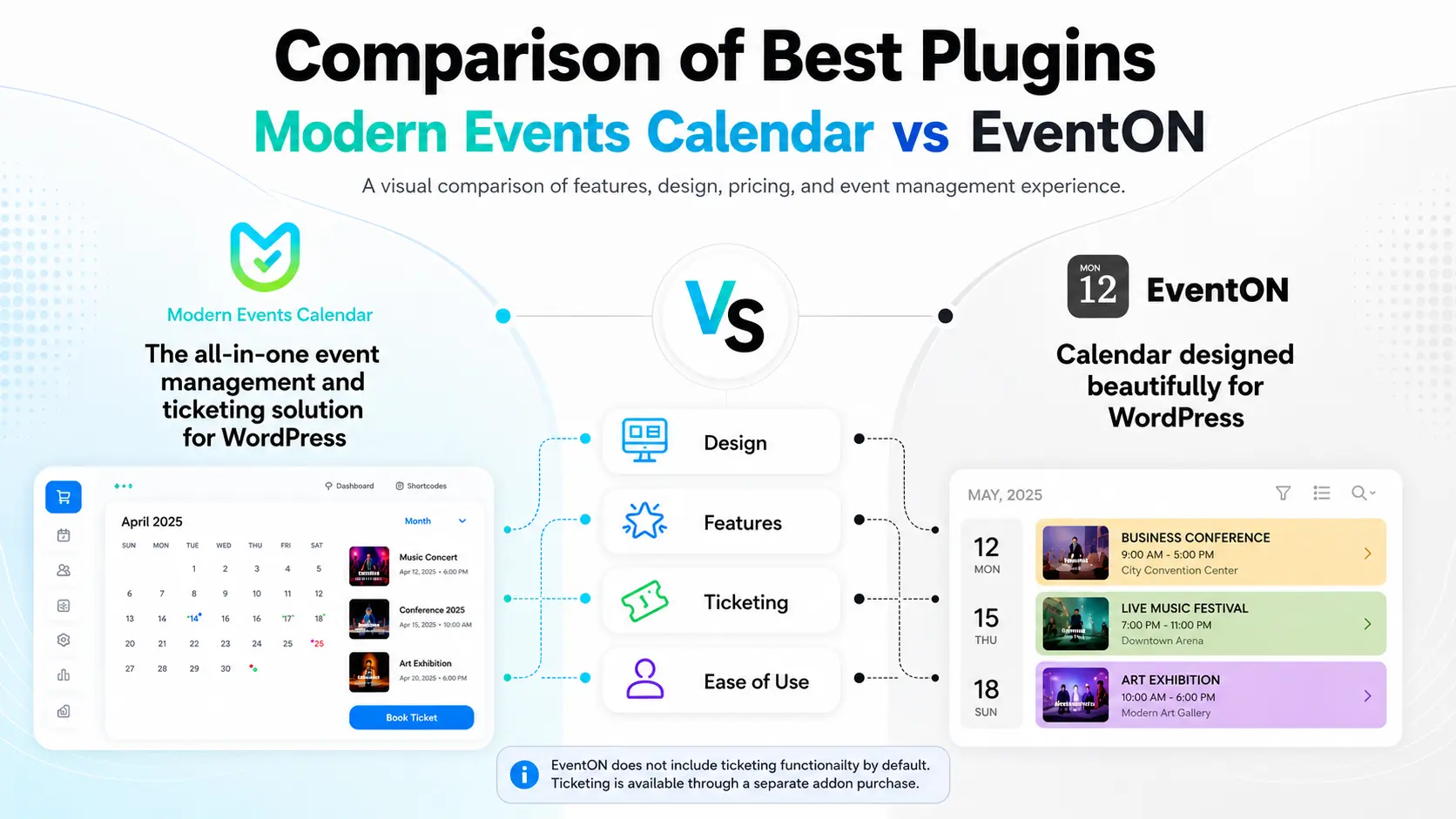
Feature comparison (57 features): Modern Events Calendar vs The Events Calendar vs Eventin vs Amelia vs EventON
You're viewing 20 of 57 features. Click to expand the table and read the whole comparison, or collapse it again.
WordPress Calendar Plugins Compared
The two focused tables compare the four primary candidates through the decisions that most affect ownership: the realistic cost path, how booking and ticketing are assembled, whether recurrence and frontend submissions are included early, the depth of design and Elementor control, integration cohesion, and support access.
Entry price alone can be misleading when essential workflows require additional products, higher tiers, or annual add-ons.
Comparison of the Cost Structure and UVP of Top Event Calendar Plugins
In this table we have compared how each plugin positions itself and what are their main selling points.
Entry price, cost structure, support access and overall purchase point. 🏅 = best in that column
Plugin
Entry price
Cost structure
Support access
Overall purchase point
Modern Events Calendar
$99/year; 1 site
🏅Free version includes recurrence, views, and submissions; Pro adds booking. Specialist commerce and Elementor tools are optional add-ons.
🏅Knowledge base plus chat, email, tickets, and one year of premium support.
🏅Best overall balance of capability, design control, integrations, and support.
The Events Calendar
$259/year; Essentials
Free core; paid plans bundle recurrence, tickets, submissions, and progressively deeper commerce tools across companion products.
Free forum checked about weekly; Paid target is 24-48 business hours. Recent transition feedback is mixed.
Largest mature ecosystem, but higher cost and plan complexity reduce predictability.
EventON
🏅$50 one-time; core
$120/year ticketing plus separate submission, RSVP, and booking add-ons.
Six months marketplace support; weekday vendor helpdesk.
Low-cost visual core, but operational add-ons can erase the price advantage.
WP Event Manager
Free core; bundles from $99/year
Free listings and submissions; paid bundles add calendar, recurrence, tickets, registrations, and WooCommerce tools.
Free resources; licensed support and updates with paid bundles.
Strong directory framework with a modular rather than all-in-one cost path.
Comparison of the Essential Features of a WordPress Event Calendar Plugin
Here you can see the absolute must-have features for a good event management plugin which are booking and ticketing, recurring events, design aesthetics, and ownership model.
Booking and ticketing, recurrence and submissions, design and Elementor, ownership implications
Plugin
Booking and ticketing
Recurrence and submissions
Design and Elementor
Ownership implications
Modern Events Calendar
Booking in Pro; tickets share MEC event records; WooCommerce is an add-on.
Both are available in Lite.
Largest layout library and dedicated Elementor builders.
Connected event, attendee, booking, and display data; price specialist add-ons.
The Events Calendar
Event Tickets and plan bundles supply commerce; advanced controls vary by tier.
Both require paid products or plans.
Native single-event templates; dynamic and premium widgets need paid TEC and/or Elementor Pro.
Mature, but workflows span several products and the recent transition adds support risk.
EventON
WooCommerce ticketing, bookings, and RSVP are separate add-ons.
Recurrence is core; submissions require ActionUser.
Polished cards; mainly settings, blocks or shortcodes, and template overrides.
Every added workflow creates another license and compatibility surface.
WP Event Manager
Ticketing, registrations, attendee data, and paid listings begin in higher bundles.
Submissions are free; calendar and recurrence are paid.
Tight Elementor compatibility and customizable listing forms.
Efficient for directories, but bundle selection determines operational depth.
Booking, tickets and recurring events in one plugin
MEC Pro starts at $99/year for one site, with one year of premium support and a 30-day money-back guarantee.
Free editions are available for Modern Events Calendar, The Events Calendar, EventON Lite, WP Event Manager, Amelia, My Calendar, Events Manager, Event Organiser, Sugar Calendar Lite, Eventin, Event Espresso Decaf, Booking Calendar, Pie Calendar, and Timely.
Calendarize It! and Stachethemes Event Calendar are premium-only marketplace products.
A free plugin is usually enough for publishing basic event details, recurring listings, simple calendars, or limited registration workflows, but the exact limits differ by product.
Choose a premium plan when events generate revenue or require operational controls such as ticket inventory, online payments, approval workflows, advanced recurrence, frontend organizer dashboards, automated reminders, WooCommerce, calendar synchronization, custom fields, or direct vendor support.
Compare the cost of the required workflow rather than the lowest advertised license: a low base price can become more expensive when ticketing, submissions, payment gateways, page-builder widgets, or support are separate add-ons.
The Top 6 WordPress Event Calendar Plugins Reviewed
Overall positionMEC offers the strongest cost-to-capability balance, combining broader connected workflows, deeper design control, and a more direct support path than the other three primary candidates.
PricingModern Events Calendar Pro starts at $99 per year for one site. Lite includes recurring events, views, and frontend submissions; Pro adds booking. Price WooCommerce, invoices, seating, reports, and Elementor single-event builders separately when required.
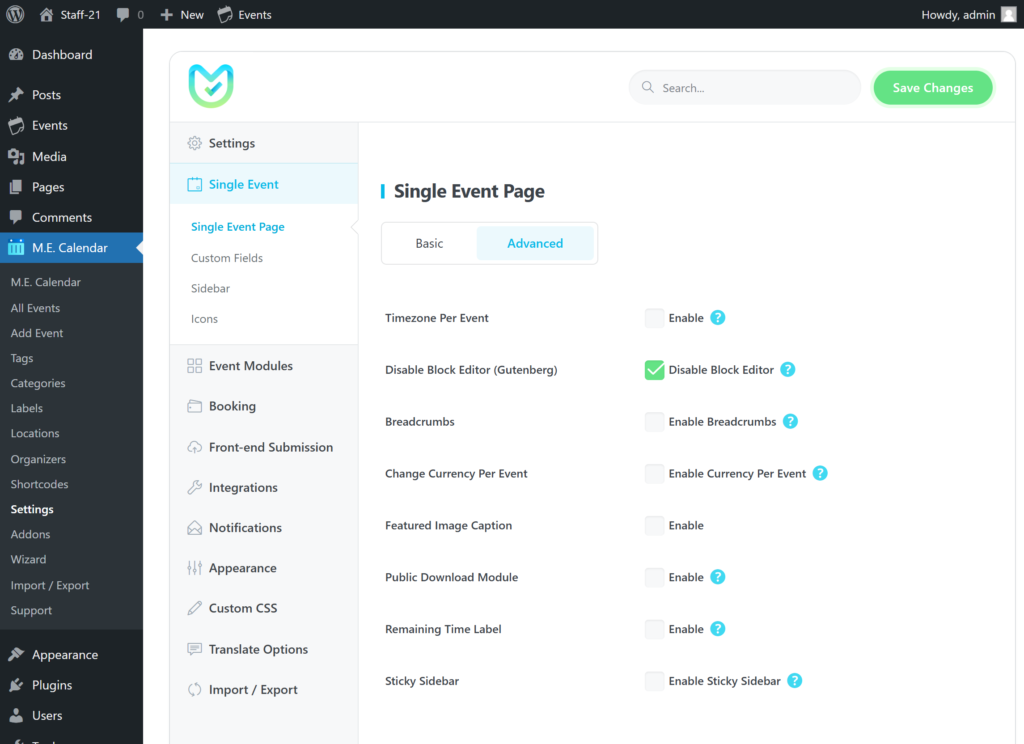
Modern Events Calendar (MEC) is swiftly re-establishing itself as a frontrunner among best WordPress calendar plugins for event management and the optimal all-in-one solution for event organizers. In a recent update, it also introduced appointment management as a native feature in its premium version.
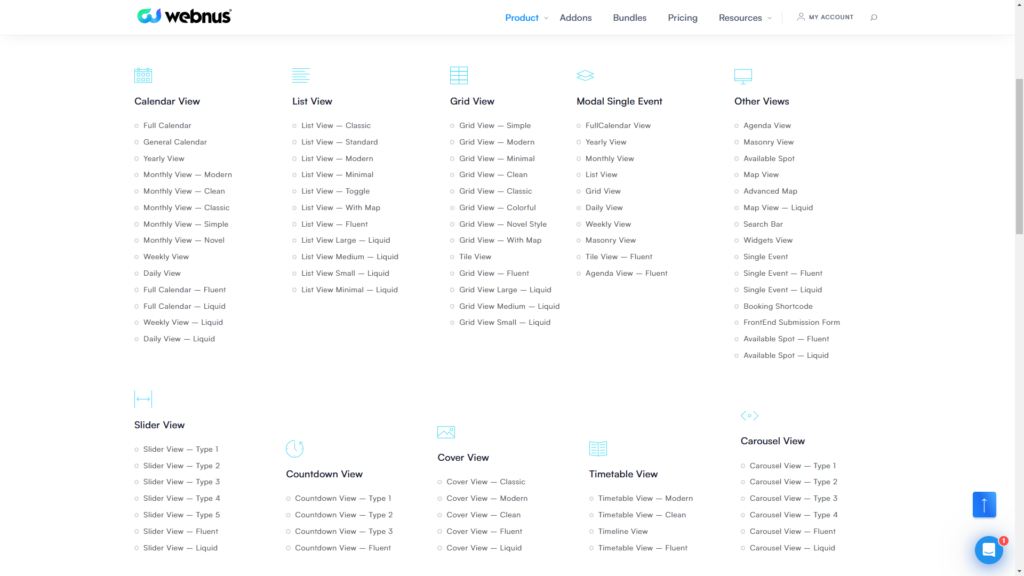
MEC’s robust range of features makes every event unique. From simple layouts for small meet-ups to a macro-view calendar for large-scale festivals, this plugin’s adaptability makes it a top choice.
The main features that stand out are:
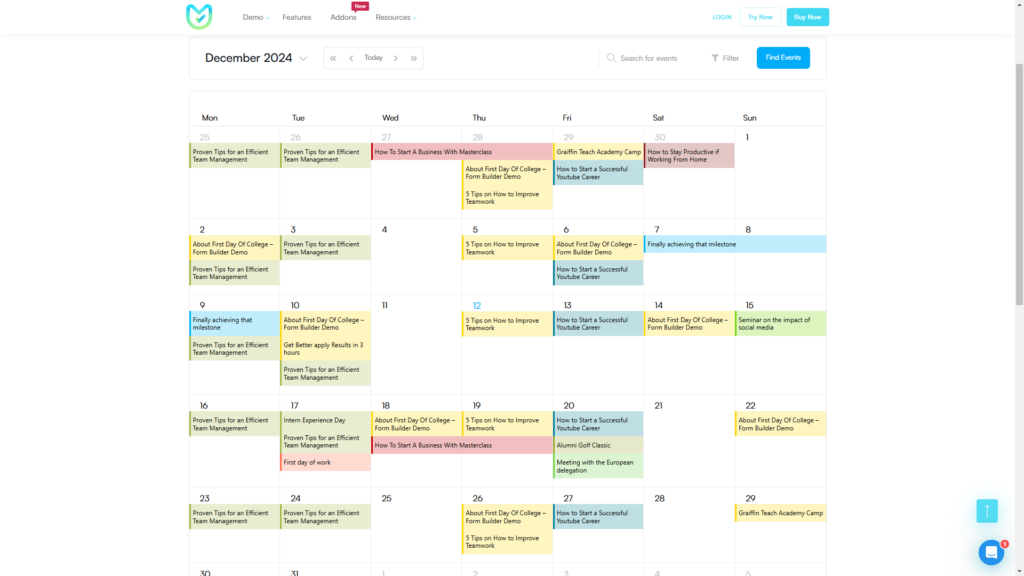
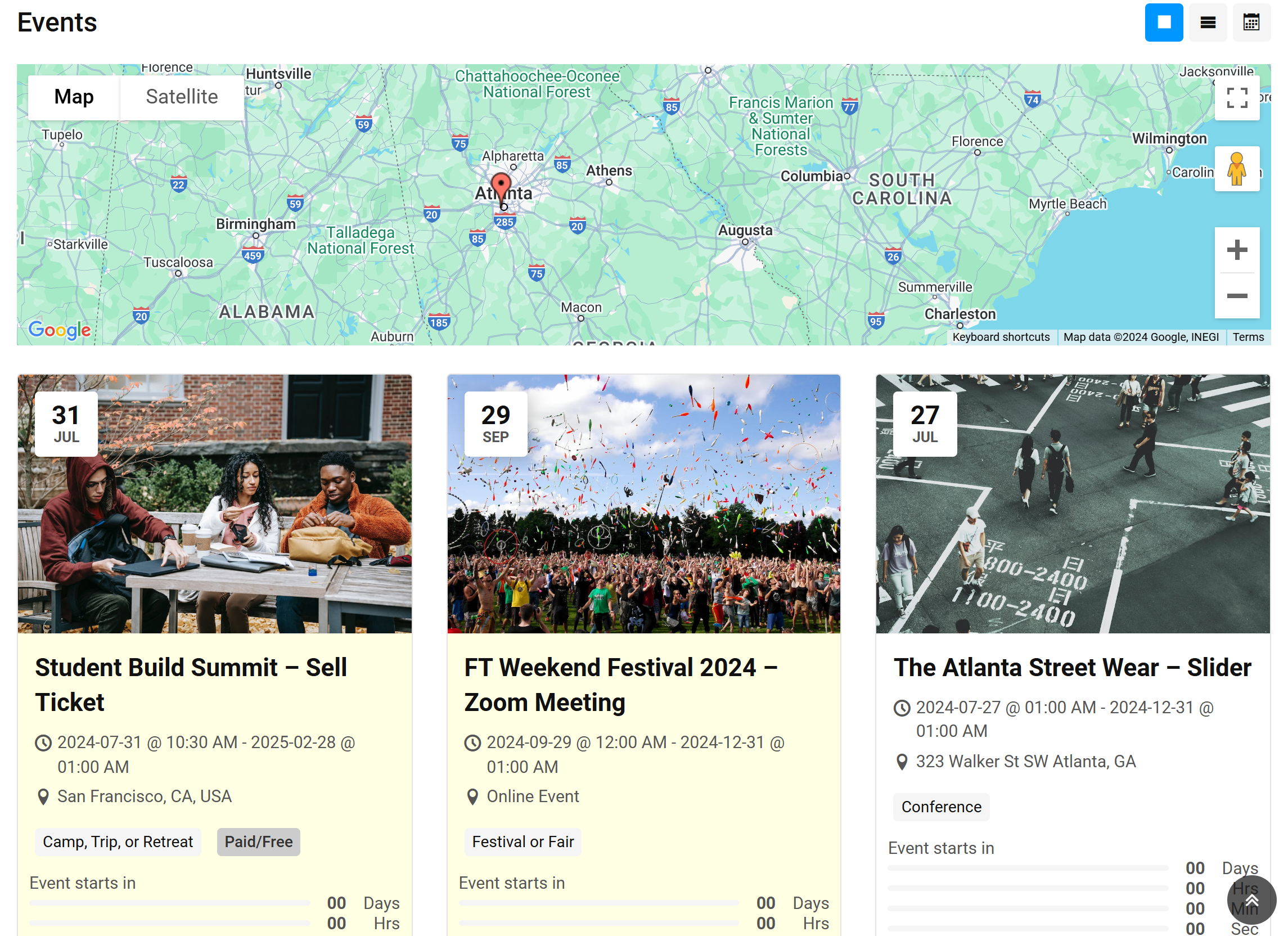
Numerous calendar views (monthly, weekly, daily, list, and tile)
An exhaustive booking system for ticket sales
Social media sharing and add to calendar widget
What really stands out is MEC’s seamless integration with Elementor and Gutenberg. This compatibility lets you easily customize the look and functionality of your calendars using its add-ons. You can simply drag and drop event features into your pages, making the setup process quick and hassle-free—even if you’re not tech-savvy. Combined with its advanced features, MEC isn’t just another plugin—it’s a complete event management solution.
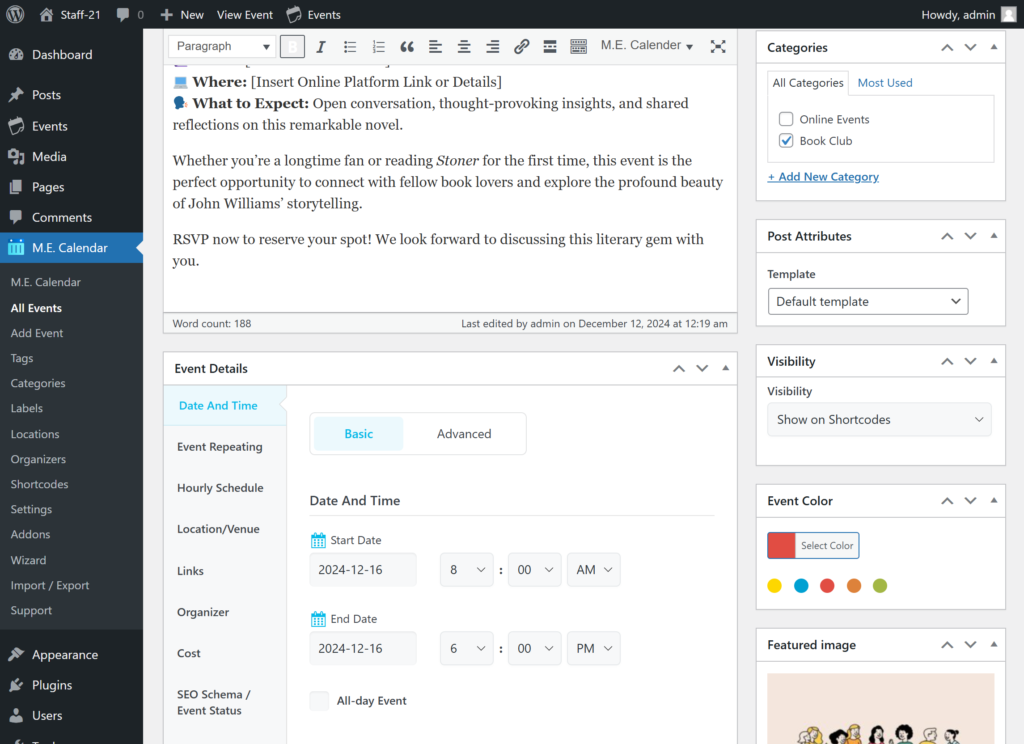
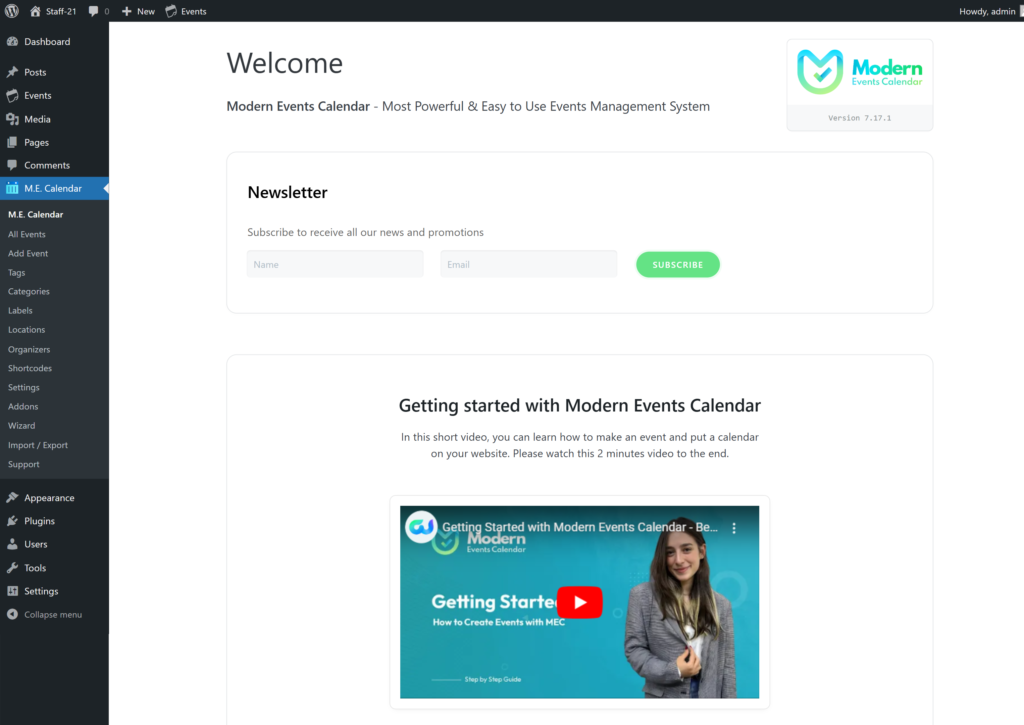
Visual Insights into Modern Events Calendar (MEC) Plugin:
Potential Limitations
In broader review aggregators, a few users have noted that in very complex setups (for example, sites with many plugins and heavy WooCommerce usage), MEC can require extra configuration to avoid conflicts.
In the Lite support forum, there are occasional threads about minor issues such as certain view styles needing adjustments, event dates requiring re‑saving after updates, or translation strings being updated over time, which suggests that some users encounter small, fixable quirks rather than systemic problems.
If you’re an event organizer looking for a reliable and flexible tool that simplifies the entire process, from setup to ticket sales, MEC is a smart choice.
So whether you're coordinating a local workshop or a multi-day conference or hosting a community calendar, MEC offers a streamlined, intuitive solution that adapts to your needs, making it a standout option in today's WordPress ecosystem.
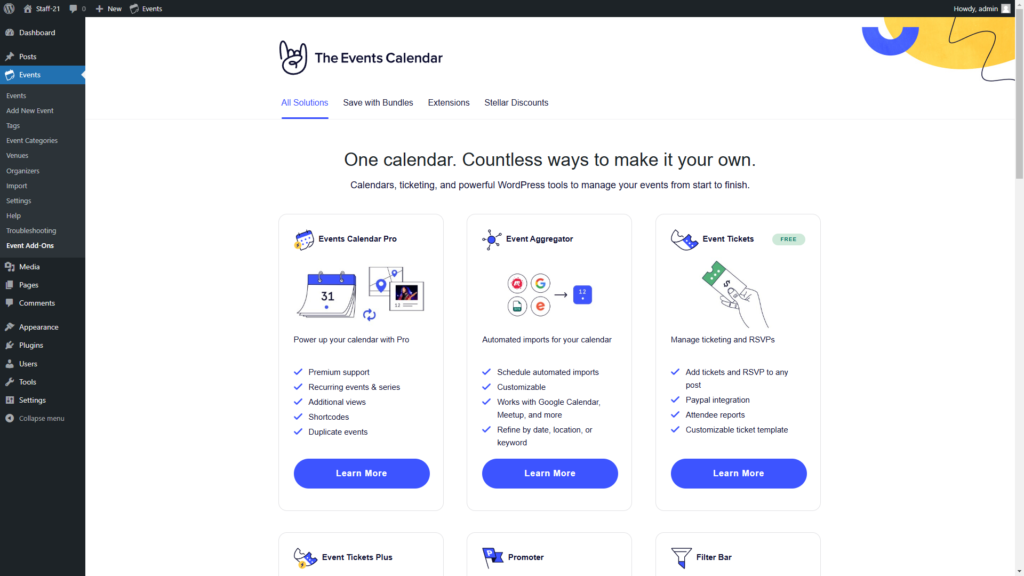
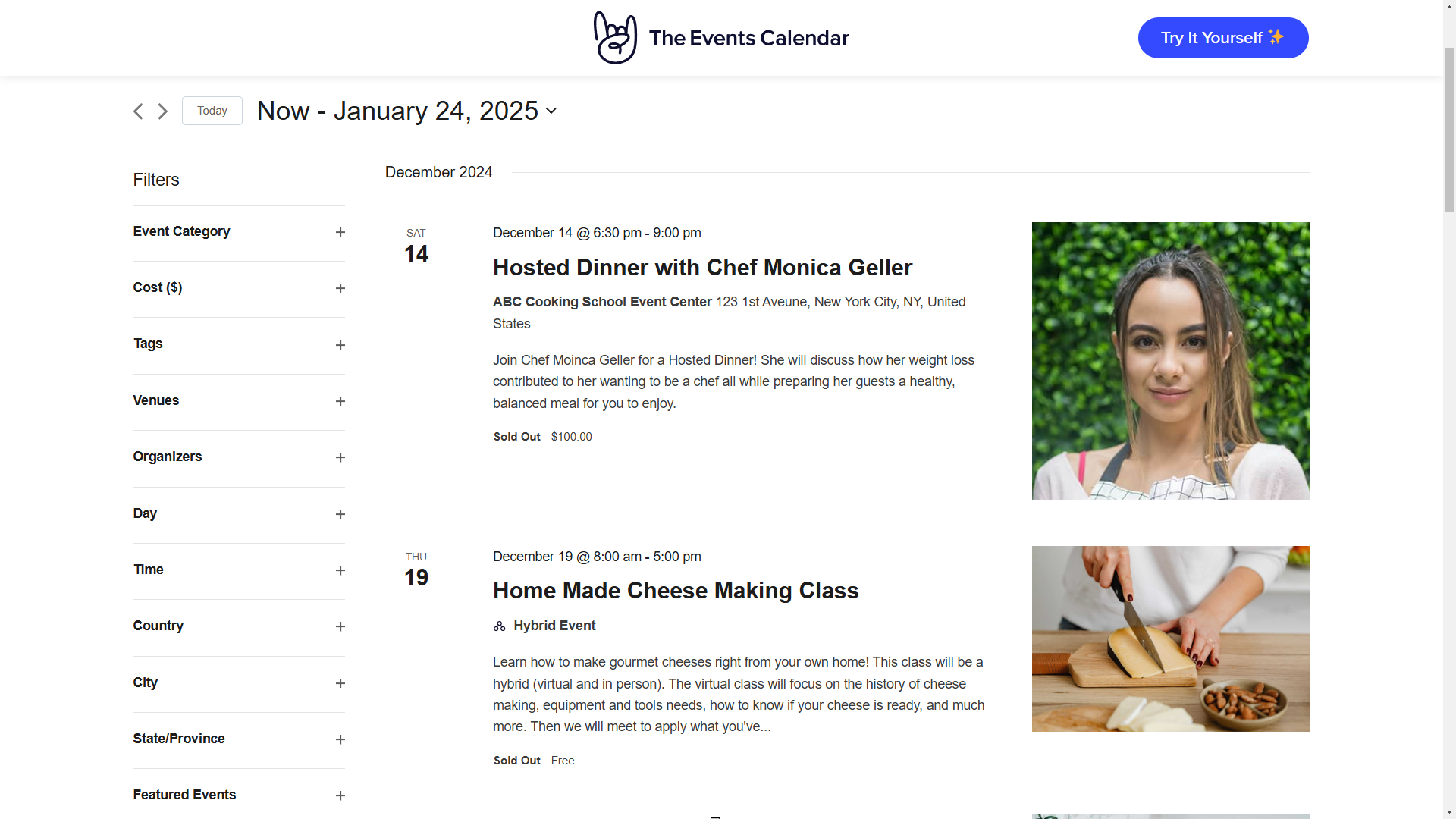
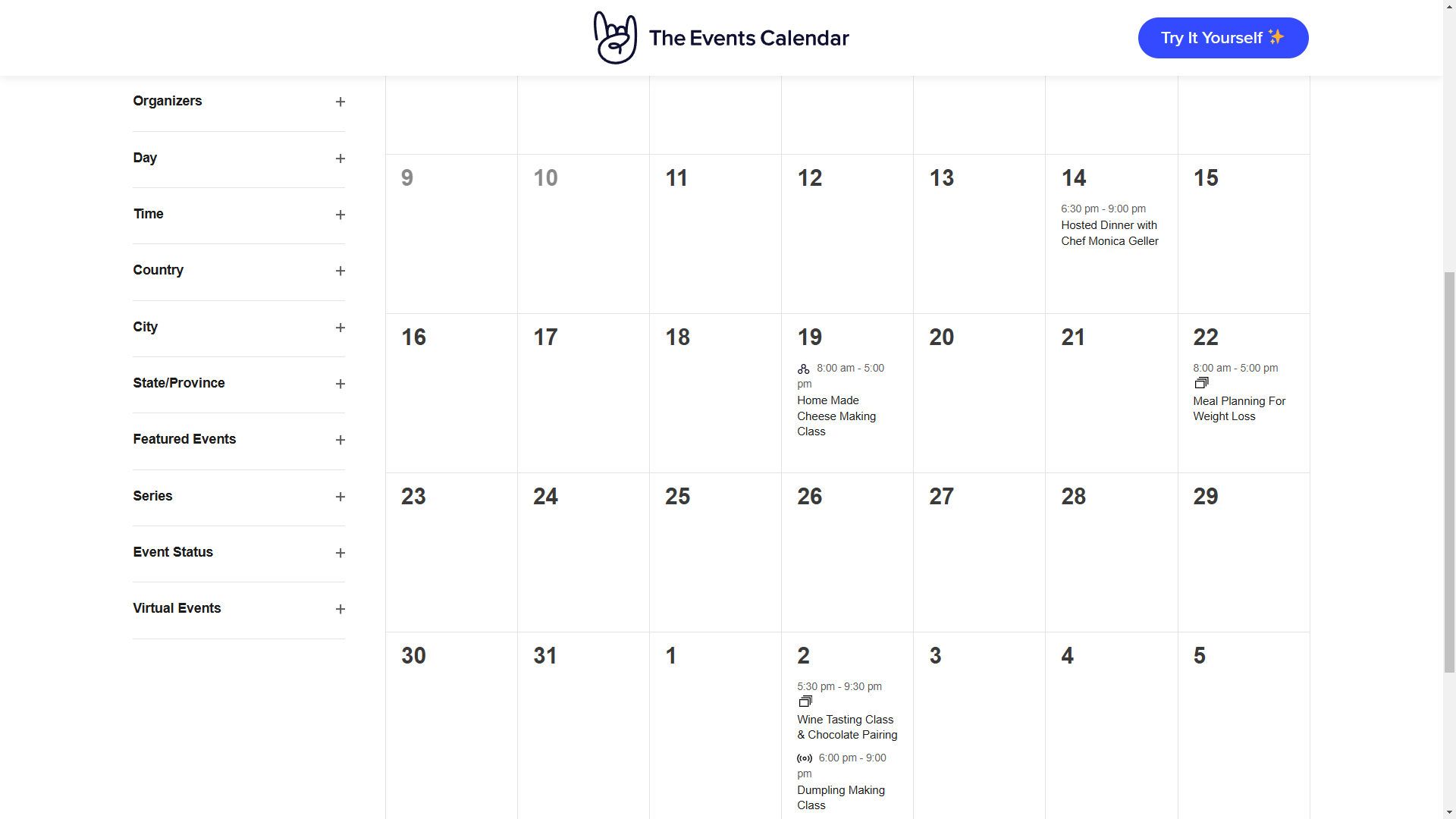
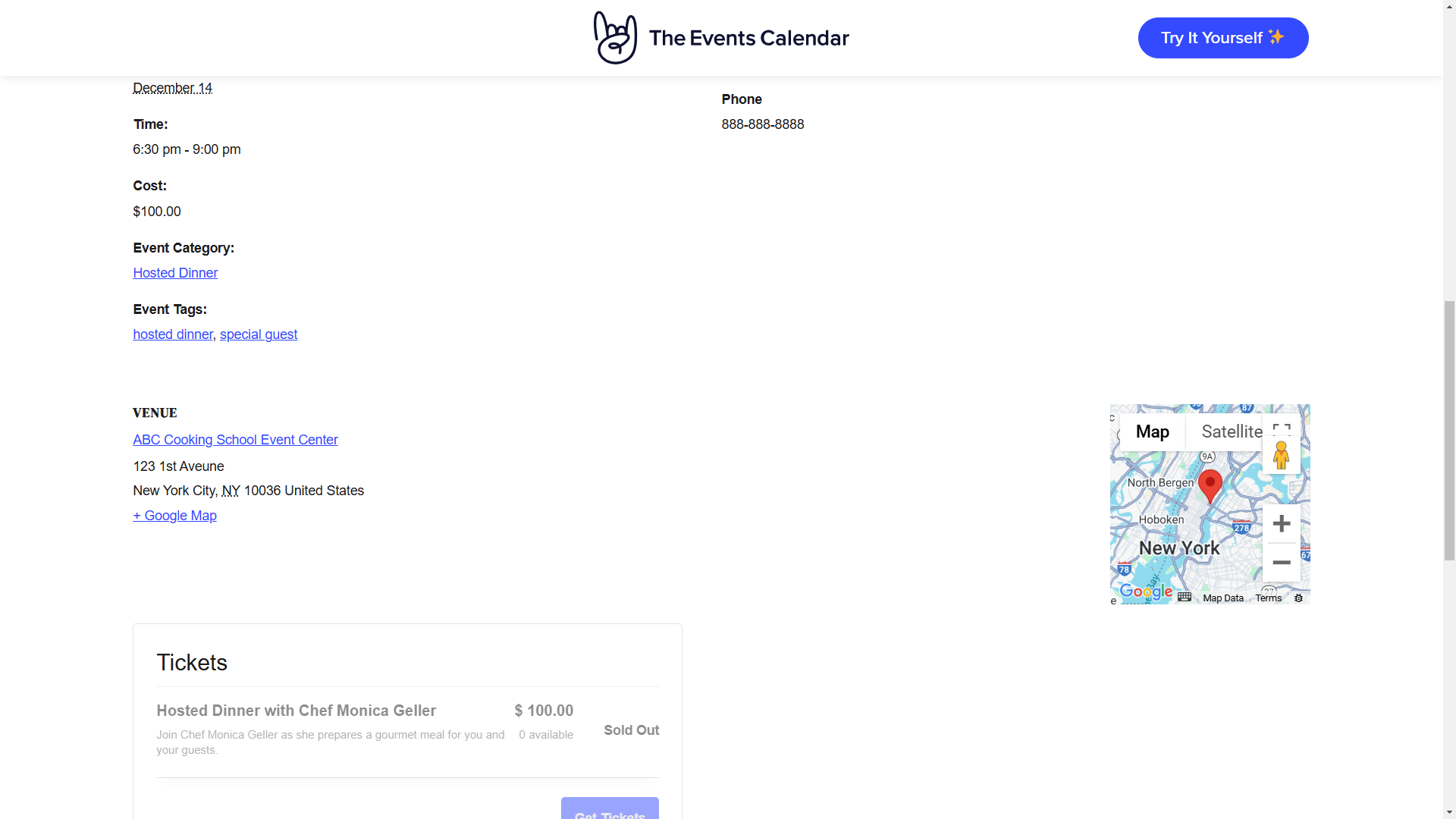
Overall positionThe Events Calendar remains the largest mature ecosystem, but its higher entry price, companion-product structure, and recent support inconsistency make ownership less predictable than MEC.
PricingPaid plans start at $259 per year for Essentials, then $399 for Pro and $599 for Elite. Ticketing, recurrence, submissions, imports, and WooCommerce support vary by plan.
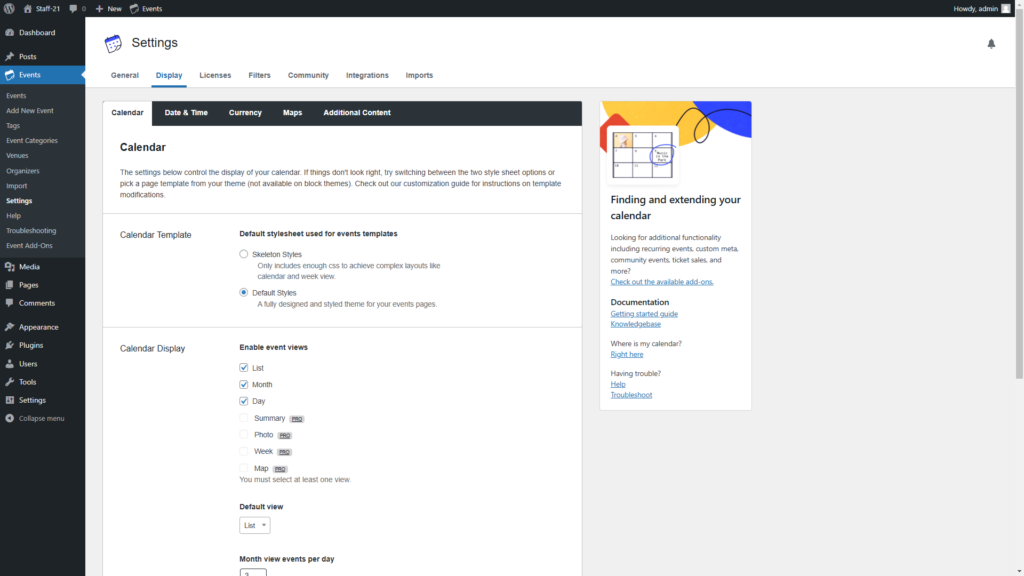
The Events Calendar by StellarWP is a household name in the event management market and has long been the go-to solution for professional organizers. What sets The Events Calendar apart is its intuitive interface and proven ability to scale, making it suitable for everything from small community calendars to high-traffic, ticketed events. It makes creating, editing, and managing events straightforward, even for beginners who need a reliable “out-of-the-box” experience.
Key strengths include:
Rock-solid reliability for high-traffic sites and large event calendars
A comprehensive feature set delivered through tiered plans (including event search & filters, event importing, and front-end submissions)
Native Gutenberg Blocks and shortcodes for deep WordPress integration
If you host regular activities like classes or workshops, the plugin’s recurring event feature (available in paid plans) is a real time-saver. For those needing synchronization, it supports importing events from Google Calendar and iCal/ICS feeds via the built-in Event Import tools. While the free version covers the basics, advanced features such as recurring events, filtering, additional views, and enhanced embedding options require a paid subscription.
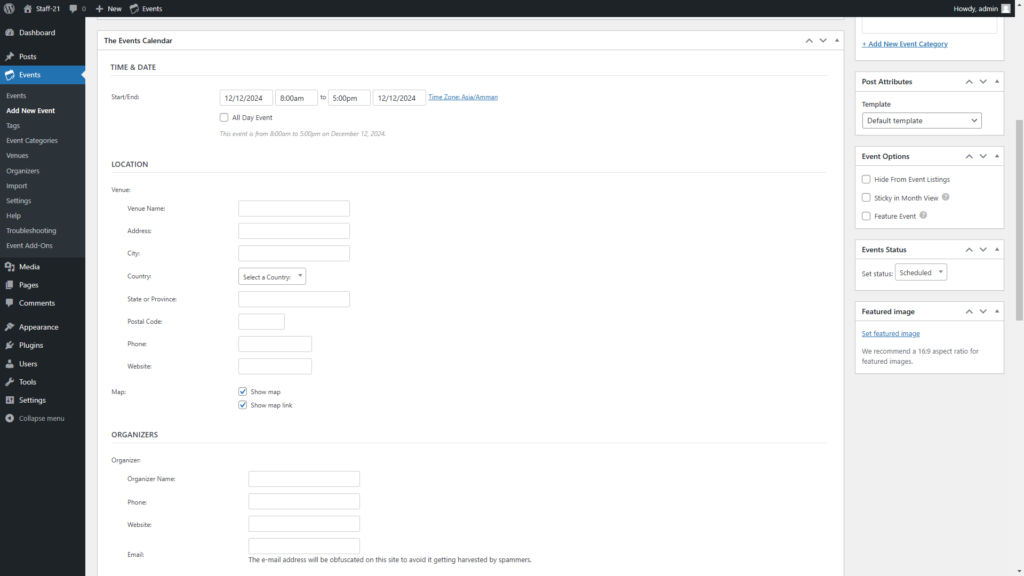
Visual Insights into The Events Calendar Plugin:
Potential Limitations
Several WordPress.org reviewers describe reliability challenges, with comments like “extremely unreliable” and warnings that you may need to “fix critical errors monthly” in their own experience.
Some users have also criticized performance and SEO behavior; one review mentions “SEO issues stating duplicate pages for every event created,” while others note the plugin made their site “noticeably slow” after activation.
This plugin still resembles a “Swiss Army Knife” in how it can fit many use cases.
The Events Calendar uses a familiar WordPress event editor and supports native Elementor single-event templates.
Dynamic templates and premium event or ticket widgets depend on Elementor Pro and the selected paid TEC products.
However, as of 2026, it’s important to note the shift to a fully bundled, premium pricing model due to acquisition by Liquid Web.
Despite the higher price compared to earlier years, developers and larger organizations continue to choose TEC as a standard-bearer for stability, scalability, and professional support.
Developers and organizers looking for a trusted event management solution will find that The Events Calendar remains a classic choice that delivers on what it promises.
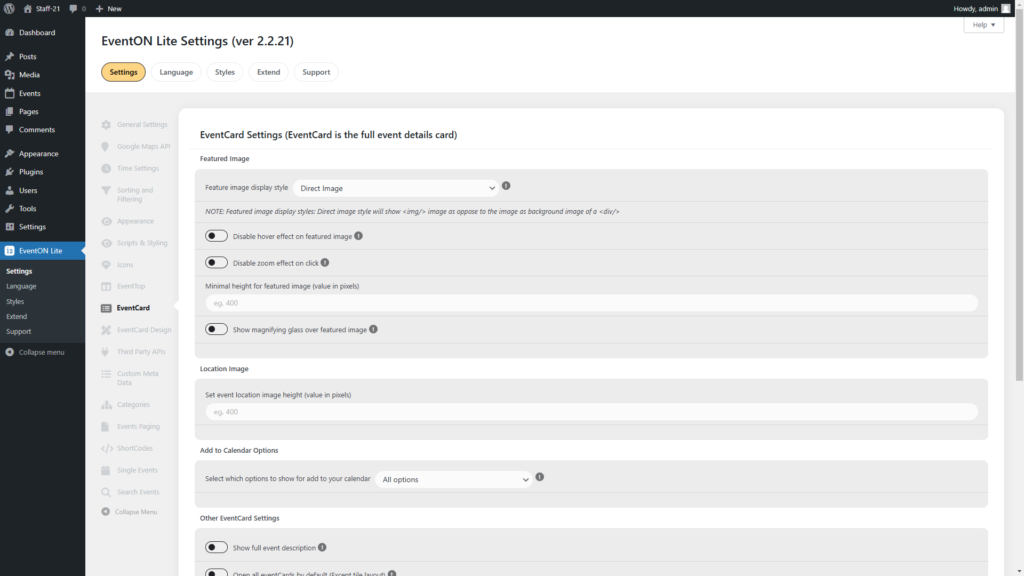
EventON
Visually Stunning Calendars
Overall positionEventON provides the lowest-cost route to a polished visual calendar, but ticketing, submissions, and booking quickly shift the value equation toward paid add-ons.
PricingEventON costs $50 as a one-time regular license with six months of support. Recurrence is included, but ticketing, RSVP, frontend submission, WooCommerce, and calendar connections generally require add-ons. The completed stack may cost much more than the base plugin.
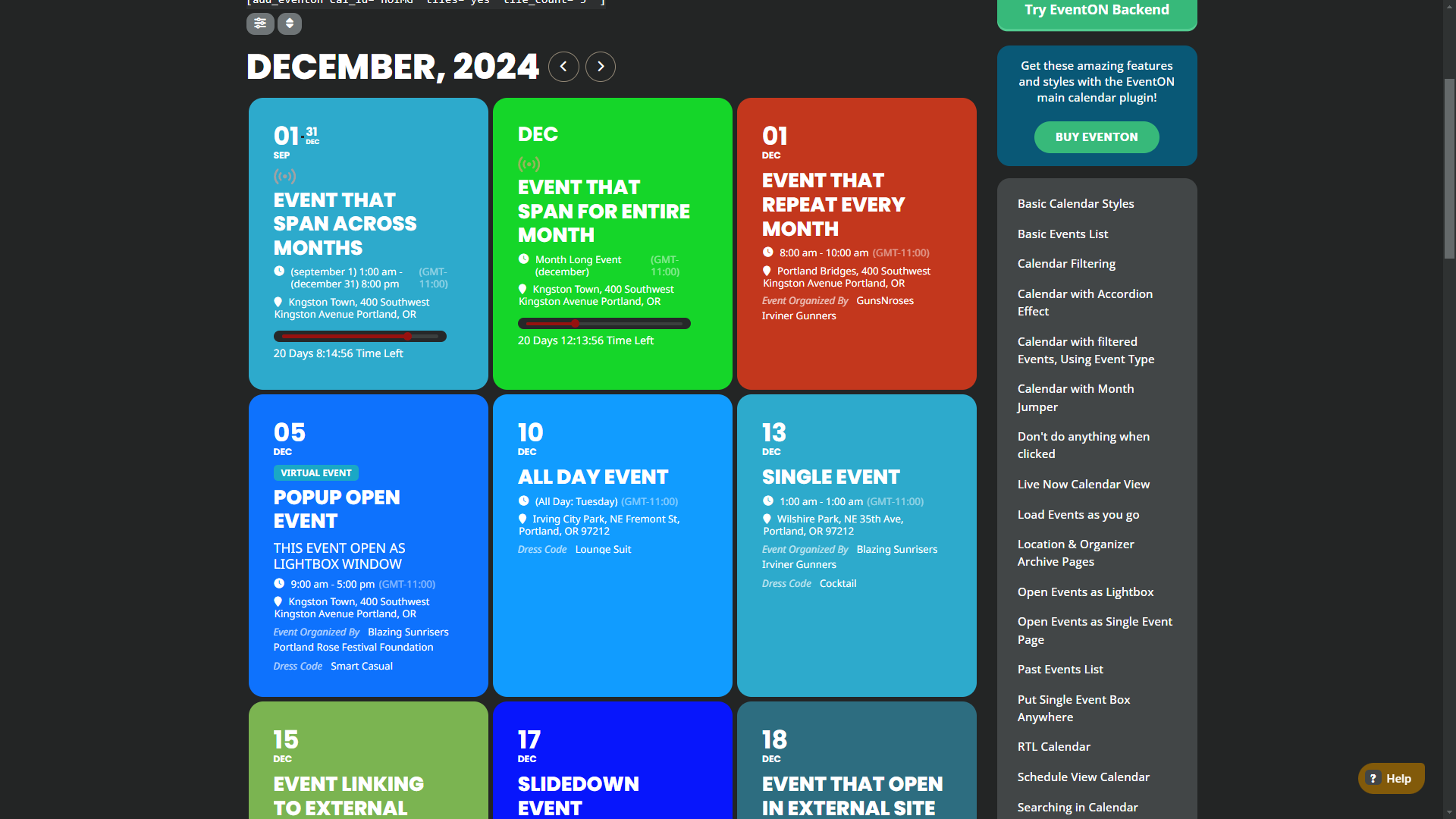
For event organizers who prioritize aesthetics and user experience, EventON is a standout WordPress plugin in 2026.
Known for its visually stunning designs and extensive customization options, EventON allows you to create calendars that not only function well but also enhance your website’s overall appeal.
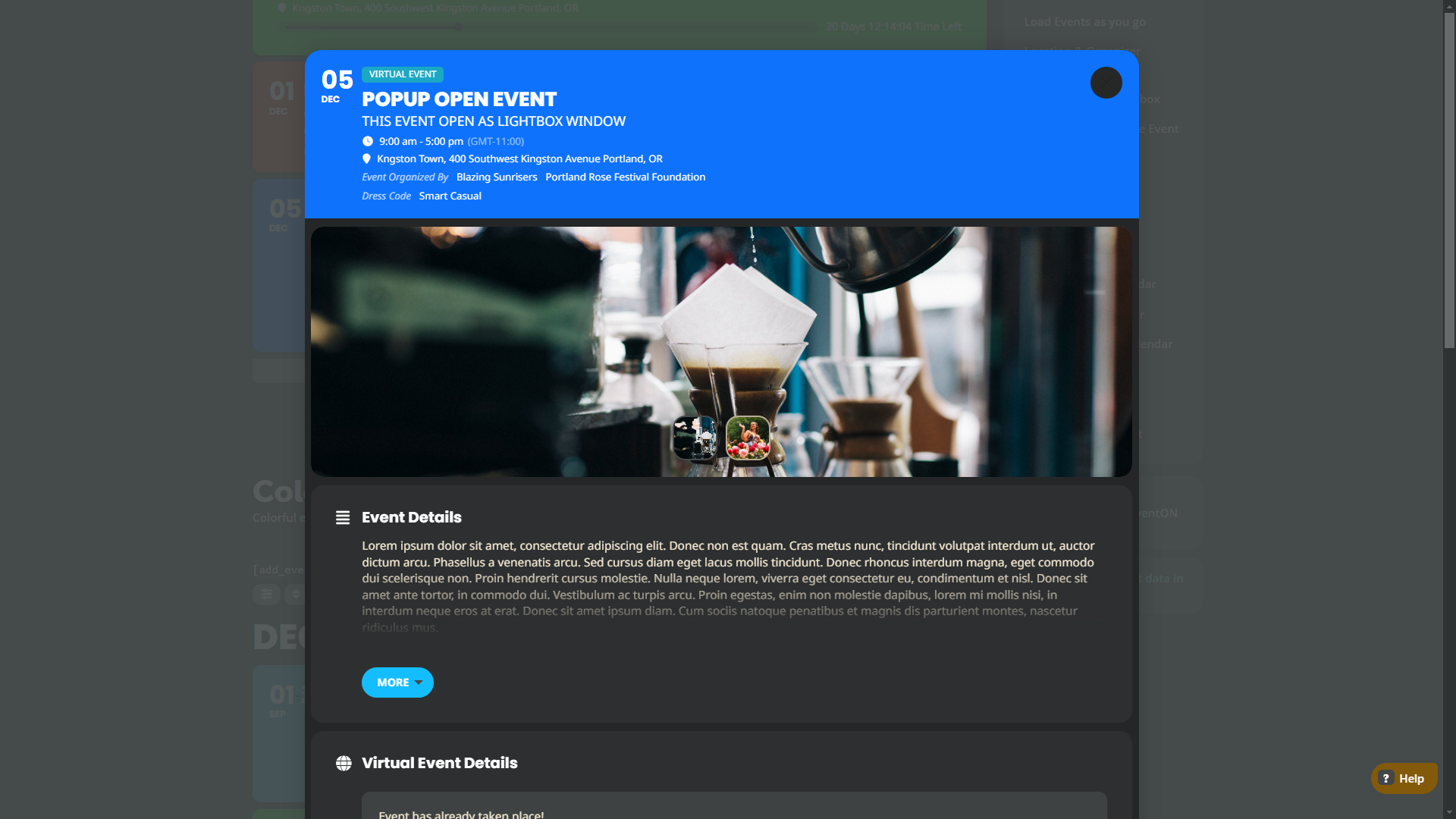
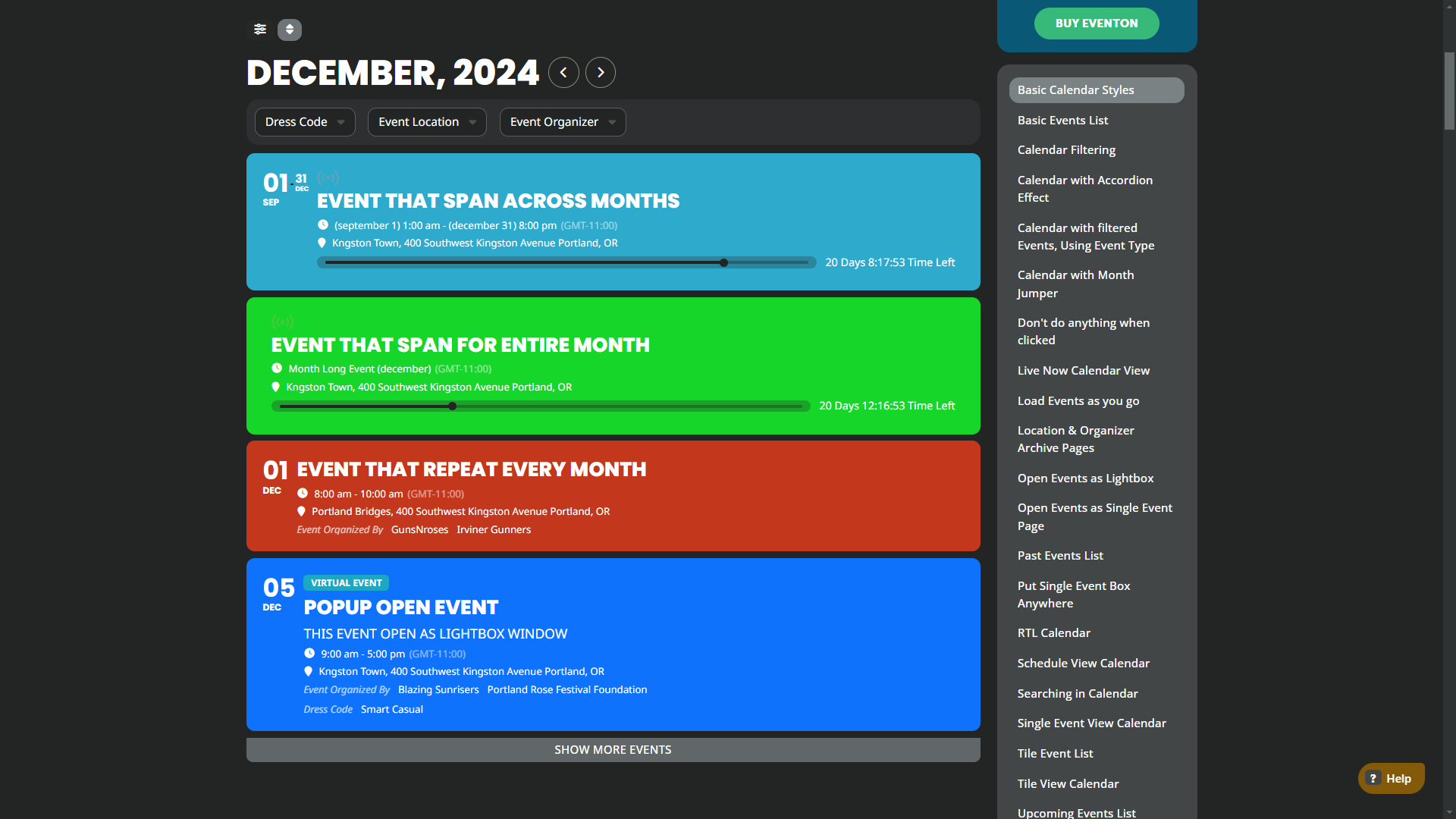
EventON’s primary strength lies in its sleek, modern design. The plugin offers a variety of layout options, including grid, list, and tile views, all of which are fully responsive and optimized for mobile devices.
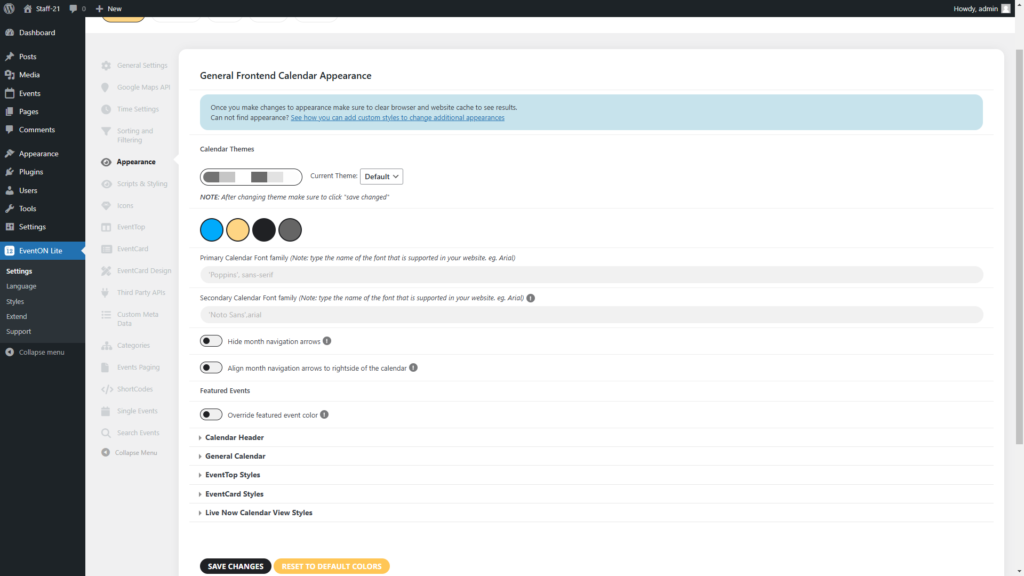
Visual Insights into EventON Plugin:
Potential Limitations
Support threads and forum posts include cases where specific updates or AJAX calls caused the site to break (white screens, failing calendar pages) until the plugin was deactivated, indicating that some users have experienced fragile update or integration behavior.
Security scanners list current and historical vulnerabilities in EventON, so teams that are very security‑sensitive may want to review patch history and be strict about keeping the plugin updated.
EventON favors modern event-card design and granular visual controls.
It works well for brands that want a polished calendar and can assemble functions selectively.
The modular model is also its weakness: verify add-on compatibility, renewal terms, and total cost before combining ticketing, submissions, virtual events, and WooCommerce.
It also supports advanced features like multi-day events, recurring events, and event categories out of the box but to expand functionality you’ll need to purchase add-ons like RSVP Events, Event Tickets, and Virtual Plus (e.g., Zoom).
In the end, EventON is perfect for businesses and organizations that want their event calendars to stand out visually. Those who value style and flexibility will find enjoyment in the ability to create visually appealing event calendars that captivate audiences.
WP Event Manager
Lightweight and Flexible
Overall positionWP Event Manager is strongest as a frontend event-directory framework; its value is modular control rather than an all-in-one calendar, booking, and support package.
PricingThe core plugin is free; paid bundles start at $99 per year. Advanced calendars, recurrence, registrations, ticket sales, WooCommerce, and other operational tools are bundle or add-on features. Elementor compatibility is useful for directory-style sites.
WP Event Manager is a top contender for small to medium-sized businesses seeking a fast, minimalist event solution. This plugin is designed to be lightweight, meaning it won't bloat your site's load times. It treats events almost like job listings, making it highly effective for community portals and directories.
Features that define the experience:
Modular Design: Only install the features you actually need.
Front-end Submission: Allow users to submit and manage their own events.
Exceptional Performance: One of the fastest-loading calendars on the market.
It integrates perfectly with Google Maps for locations and WooCommerce for ticket sales. Its modularity is its greatest asset; if you don't need a map, you don't install the map add-on, keeping your database clean.
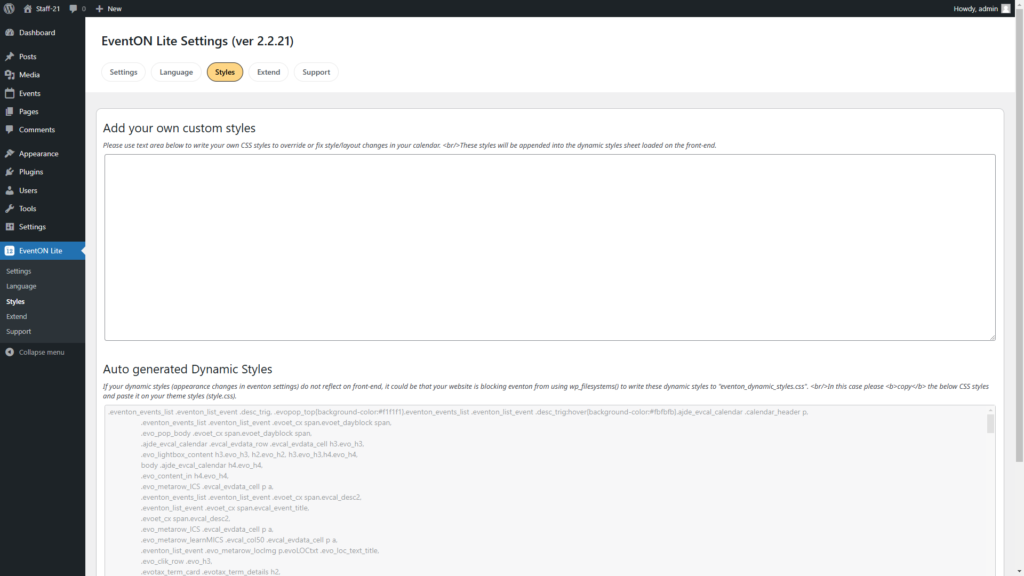
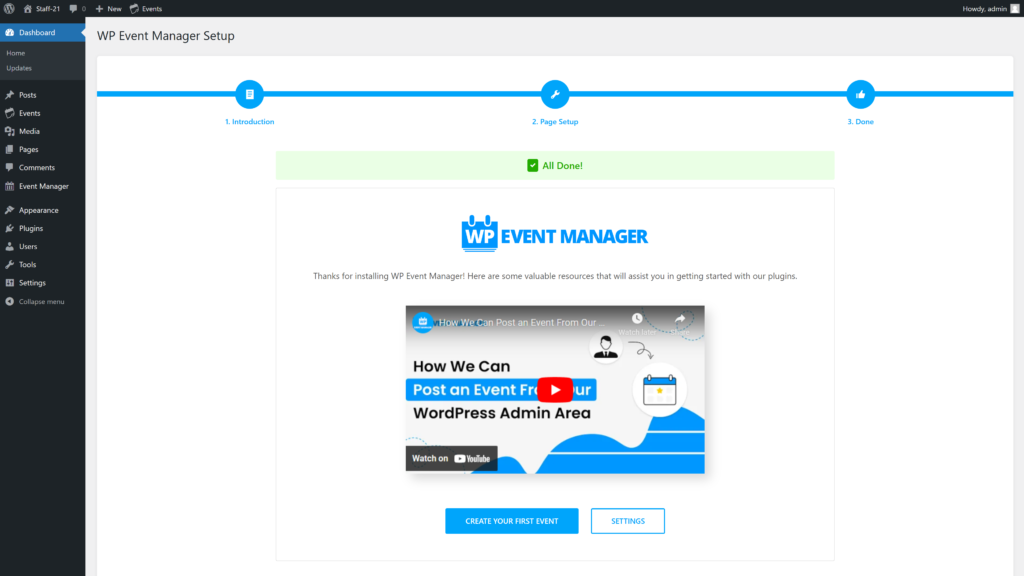
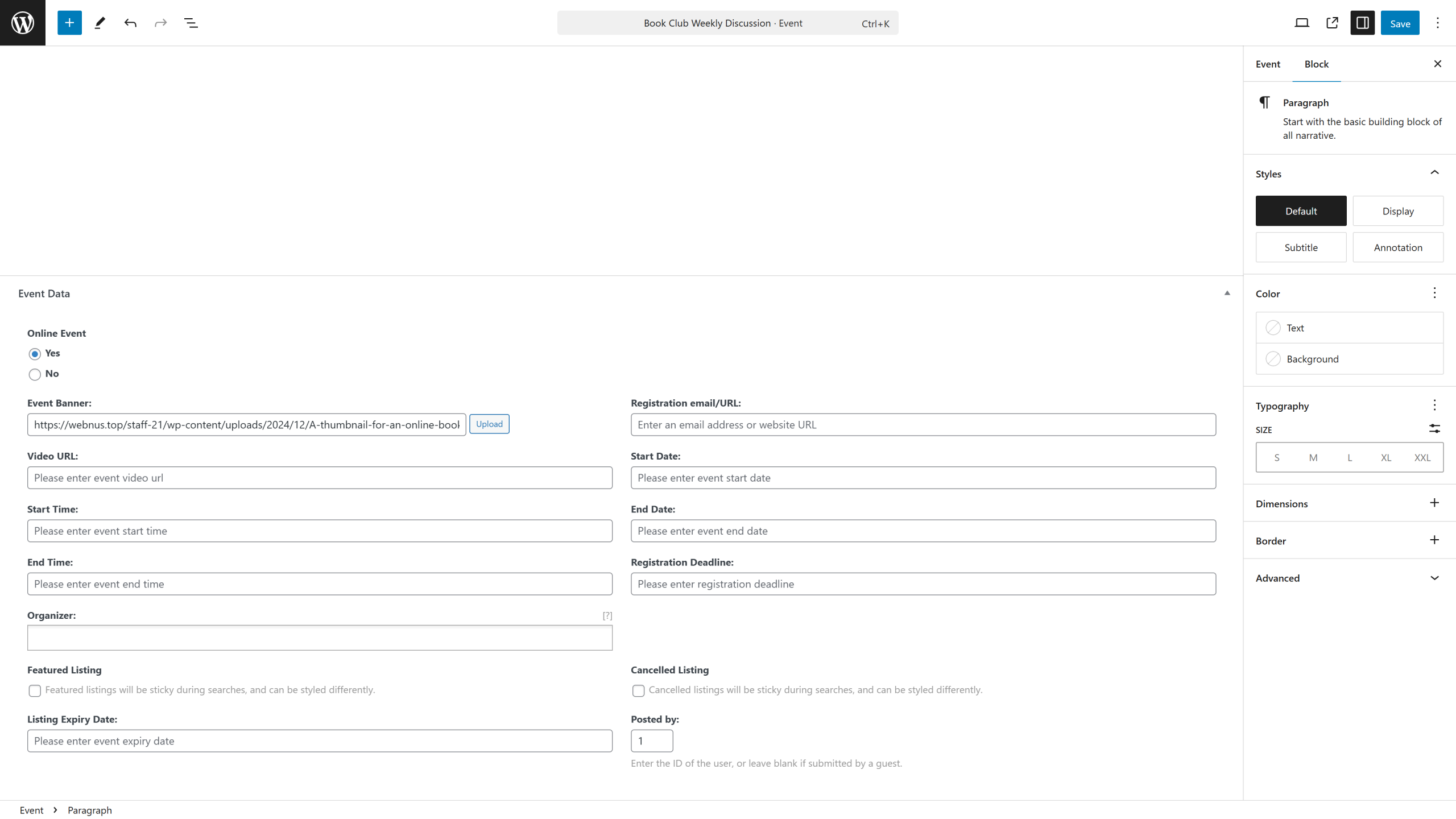
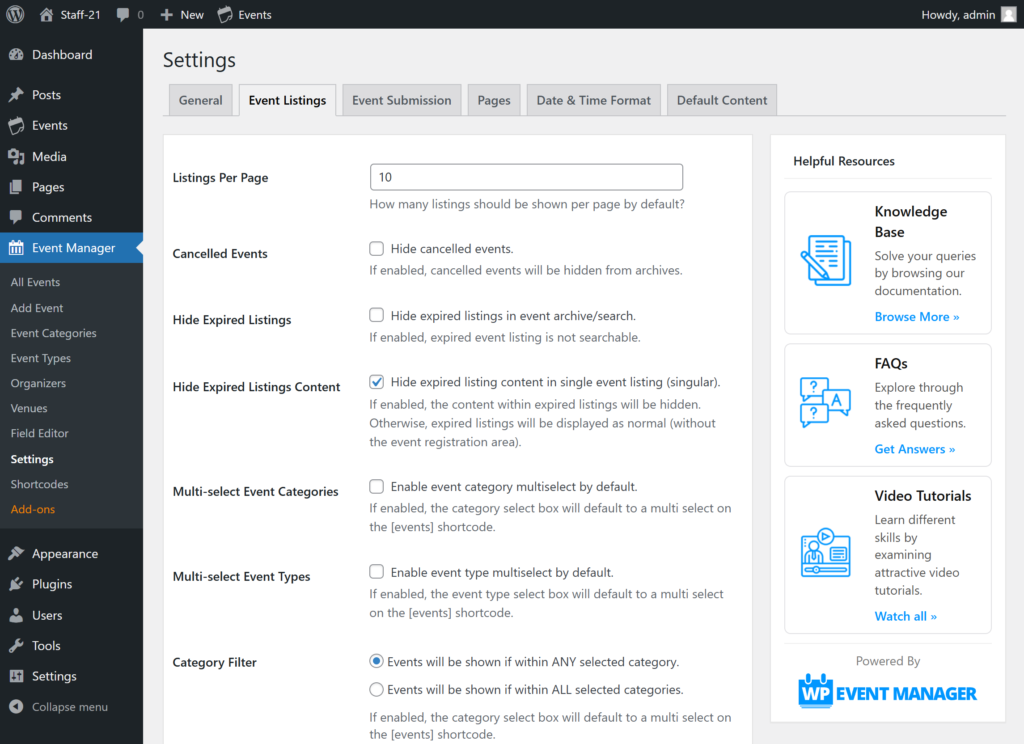
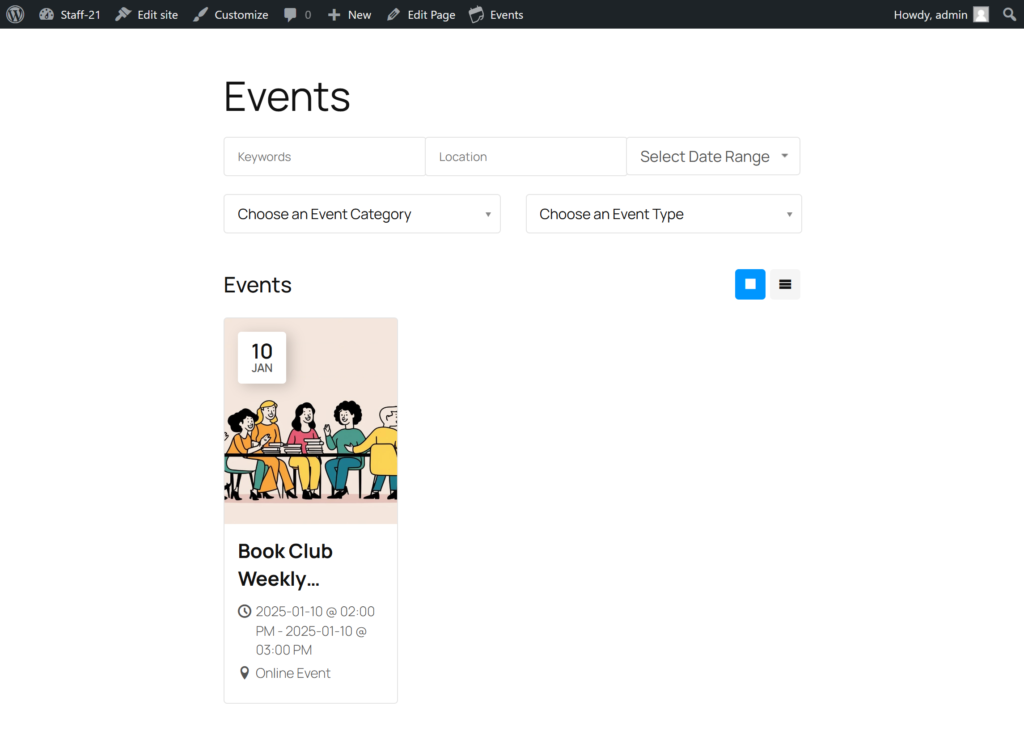
Visual Insights into WP Event Manager Plugin:
Potential Limitations
In third‑party software reviews, WP Event Manager is noted for having “very limited reporting and analytical features,” which can be a drawback if you need detailed attendance or revenue reports inside WordPress.
The same review also mentions “terrible, terrible customer support,” and independent video reviews point out unusual thumbnail behavior (22:9 aspect ratio that can distort images unless templates are adjusted).
WP Event Manager is designed for listings and frontend organizer submissions.
Its modular architecture suits directories, associations, and marketplaces, but buyers wanting one all-inclusive license must assemble a bundle and confirm whether the chosen package includes registration, tickets, recurrence, maps, alerts, and organizer dashboards.
The front-end submission function is one of the most useful to sites that let their users submit not only their own events they organize by themselves, but also community bulletins or directories that are on niche topics.
It’s worth noting that the free version has limited features, and advanced options like ticketing or calendar views require paid add-ons. While the plugin is flexible, creating a visually striking design may take some extra effort and customization.
If you’re an event organizer who values simplicity, fast performance, and flexibility, WP Event Manager offers a reliable and budget-friendly solution to help you manage events with ease.
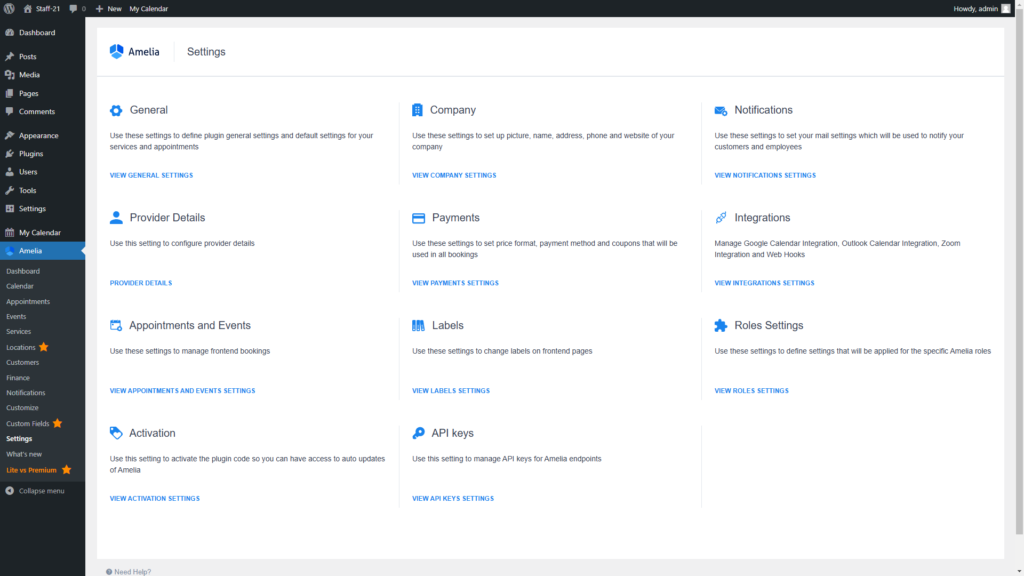
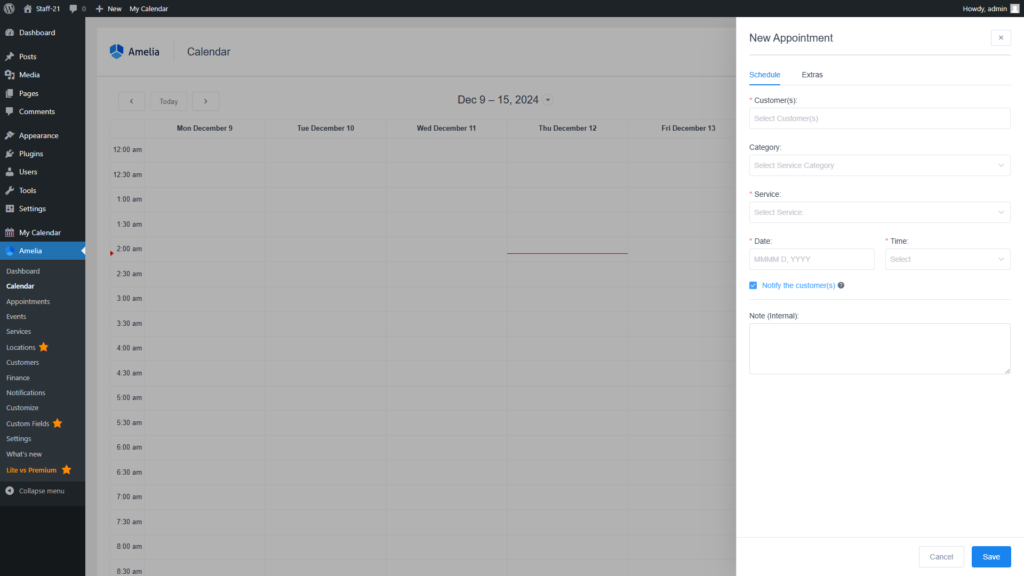
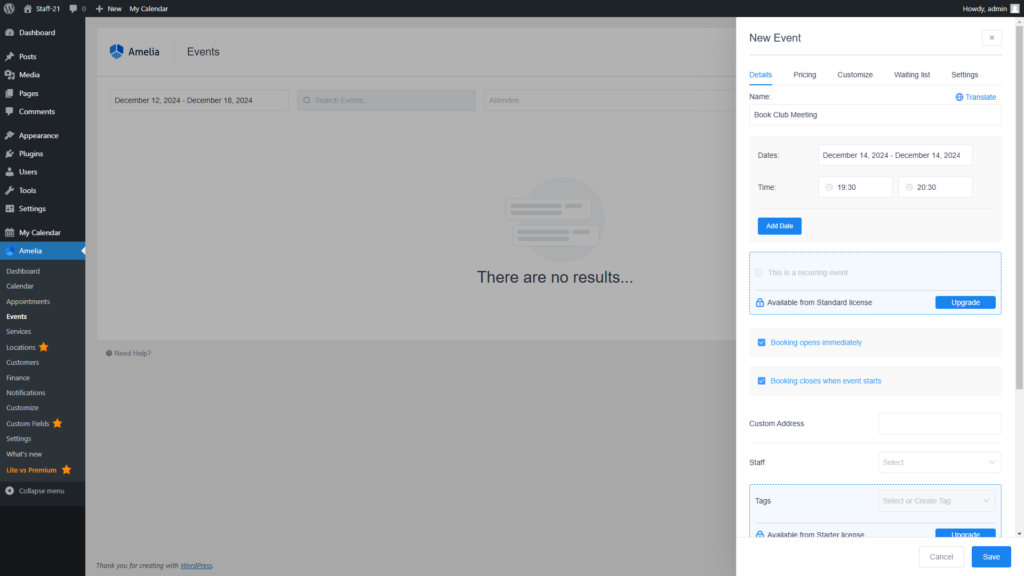
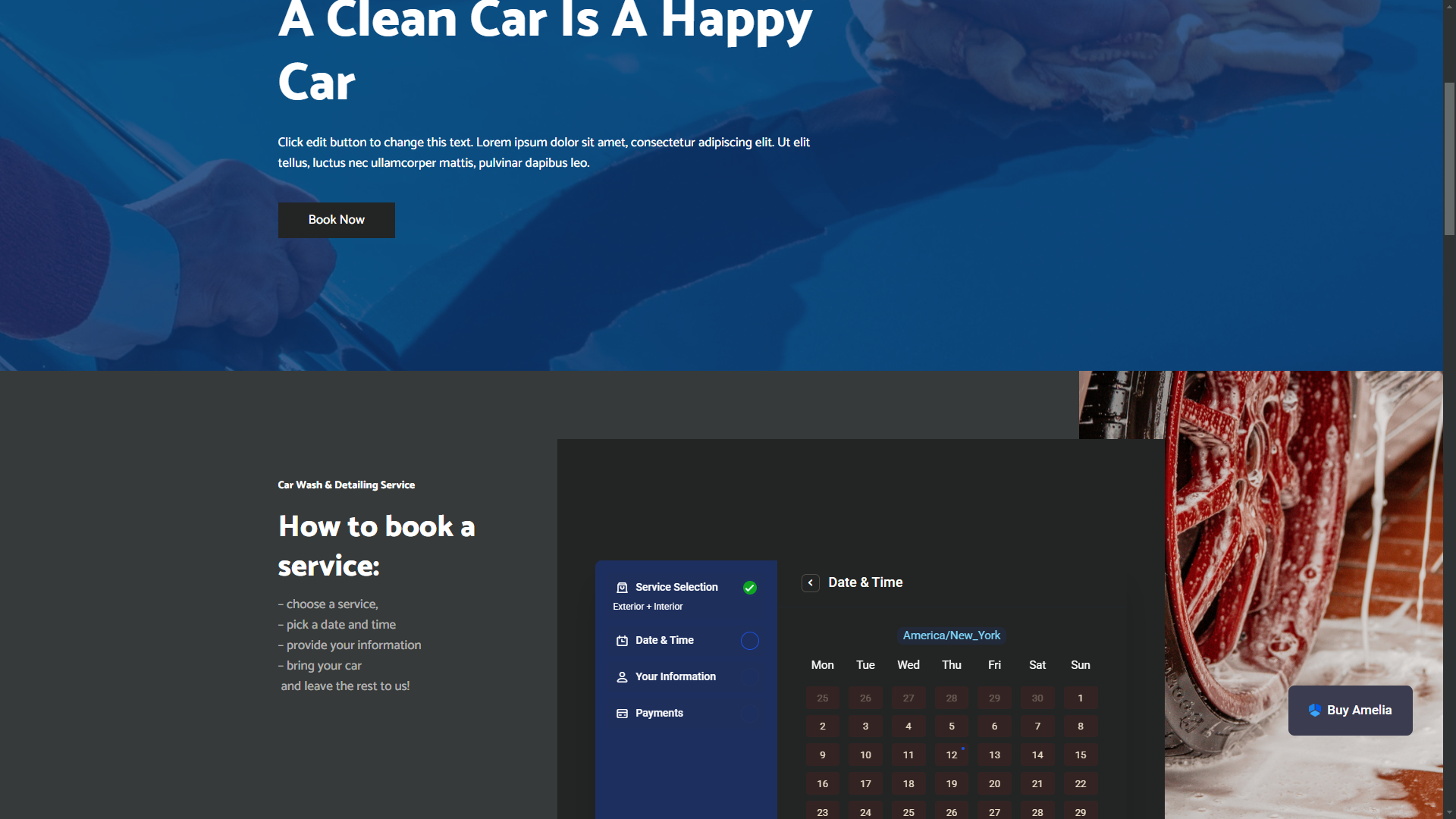
Amelia
A Dual Solution for Booking and Events
Overall positionAmelia’s point of difference is unified appointment scheduling and group-event booking, not the broadest public-calendar or community-submission feature set.
PricingAmelia has a limited free edition and paid plans from $49 per year for one domain. Confirm the tier needed for WooCommerce, Google synchronization, payment gateways, event tickets, and priority support.
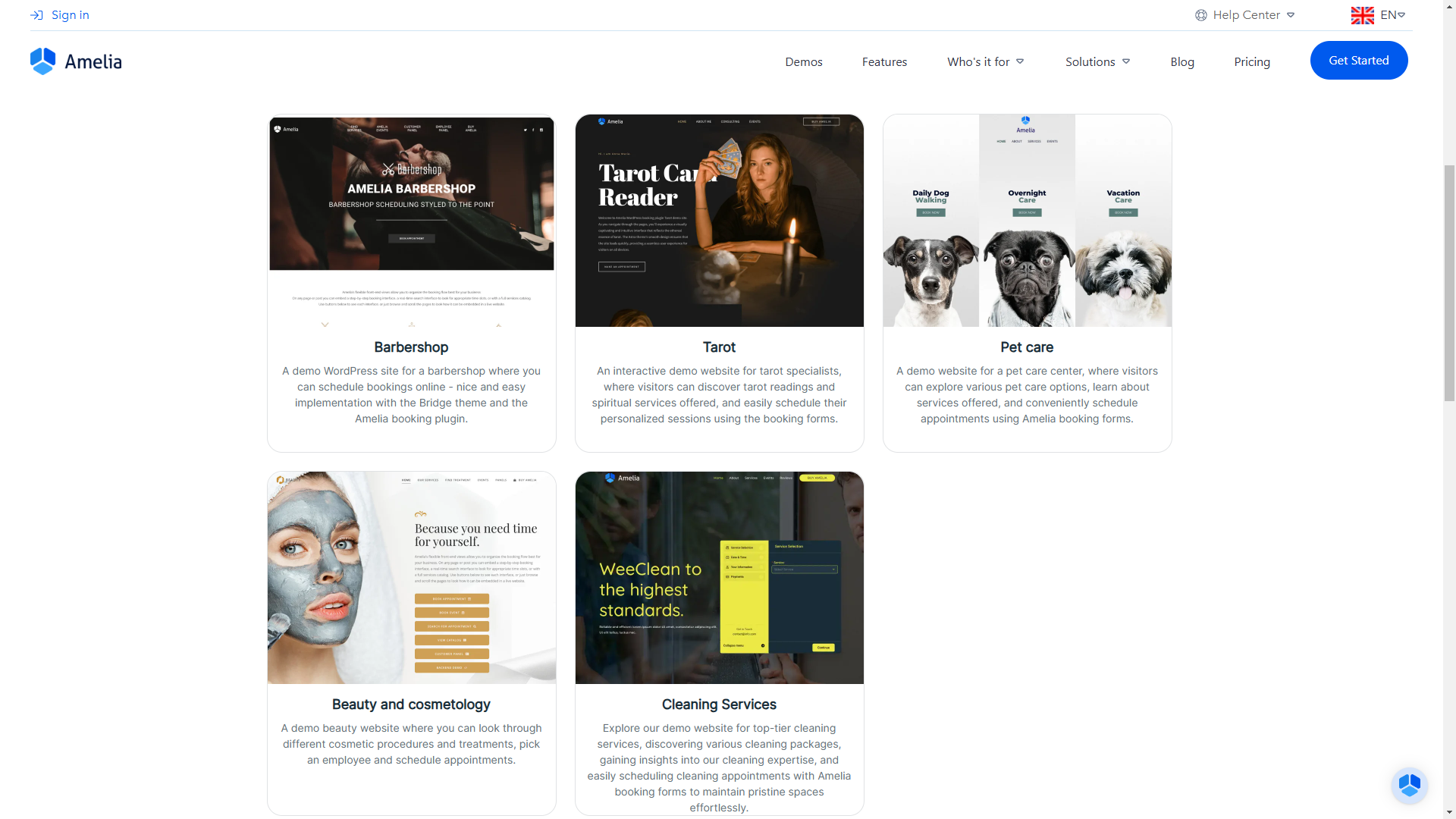
Amelia is a standout WordPress plugin in 2026 for businesses that need both event management and appointment booking in one streamlined tool.
Amelia’s intuitive interface allows users to create and manage events or appointments with minimal effort. Its modern, polished design ensures that event calendars and booking forms look professional and are fully responsive across devices.
The plugin supports recurring events, multi-day events, and group bookings, making it versatile for various industries.
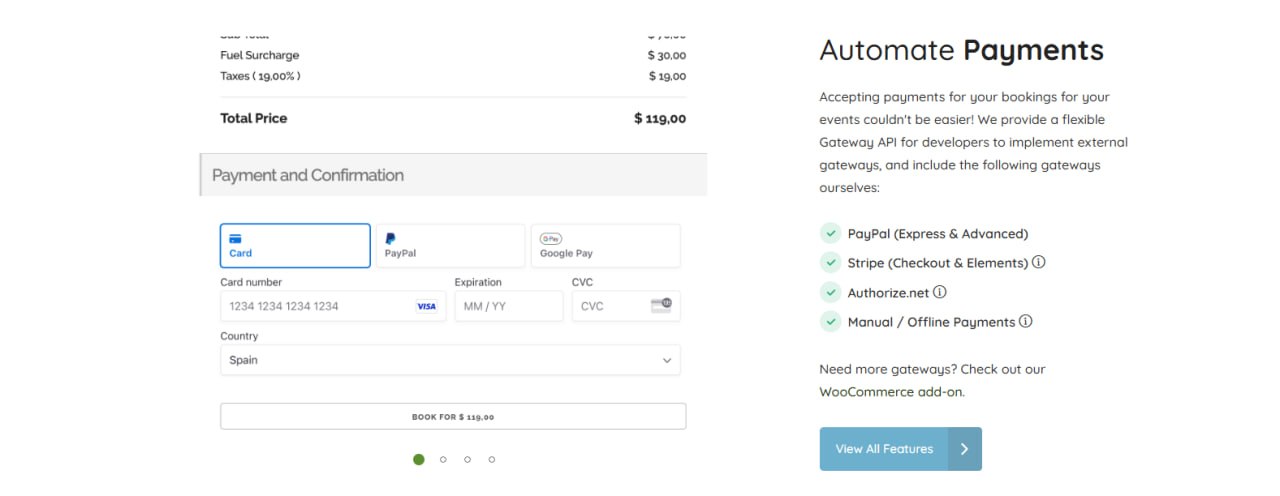
Amelia’s seamless integration with payment gateways like PayPal and Stripe enables businesses to accept payments directly through their website.
Visual Insights into Amelia Plugin:
Potential Limitations
Comparative reviews emphasize that key features (multiple payment gateways, calendar sync, video meetings, and event tickets) are locked behind higher plans, so many serious sites end up needing more than the Starter plan.
Aggregate feedback shows a mixed support reputation: some users reporting slow responses and issues during the December 2025 v9.0 launch that temporarily broke calendars for some customers.
Advanced features like automated email and SMS notifications, attendee management, and real-time availability updates further enhance its functionality.
Amelia is perfect for businesses that need to manage both one-on-one appointments (like consultations or coaching sessions) and larger events (like workshops or conferences).
For example, a fitness studio can use Amelia to schedule personal training sessions while also promoting and managing group fitness classes or special events.
Amelia is particularly well-suited for service-based businesses such as salons, spas, fitness studios, and coaching services. It’s also a great fit for any event planner who needs to manage both individual appointments and group events seamlessly.
Amelia offers a professional, user-friendly, and highly efficient platform for businesses looking for an all-encompassing solution. The free version is available on the WordPress repository and its premium license is offered in 4 tiers starting at €49 and ending on €797.
Events Manager
Feature-Dense Event Management for WordPress
Overall positionEvents Manager puts unusually broad recurrence, submissions, and booking controls in its free core, trading interface simplicity and visual polish for functional density.
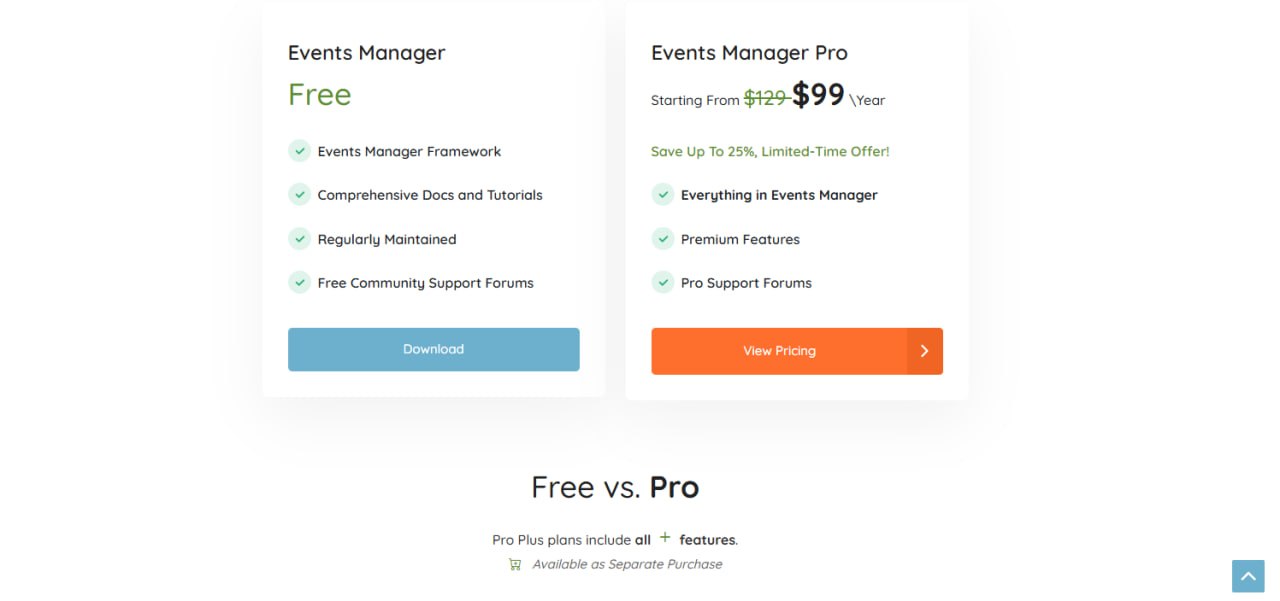
PricingEvents Manager is free and includes unlimited events and bookings. Pro is currently promoted from $99 per year for one site; Pro Plus starts at $129 per year and includes all add-ons. WooCommerce integration is sold separately.
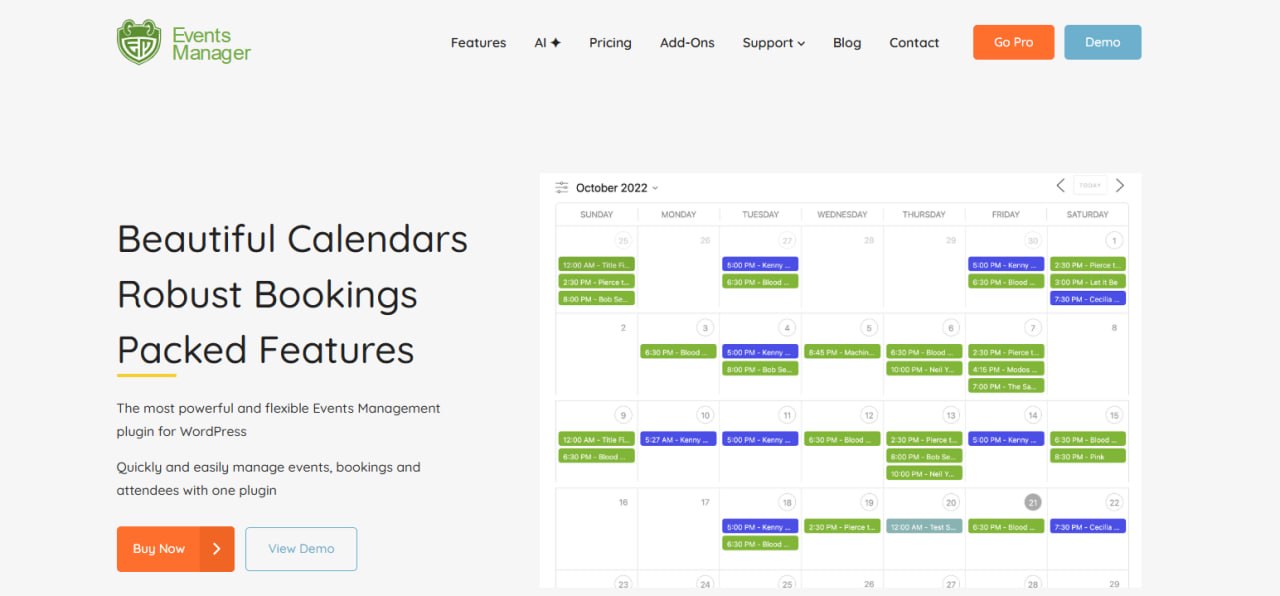
Events Manager exposes detailed recurrence, submission, booking, and attendee controls in WordPress, from the frontend submission form to its denser administration screens.
Core highlights:
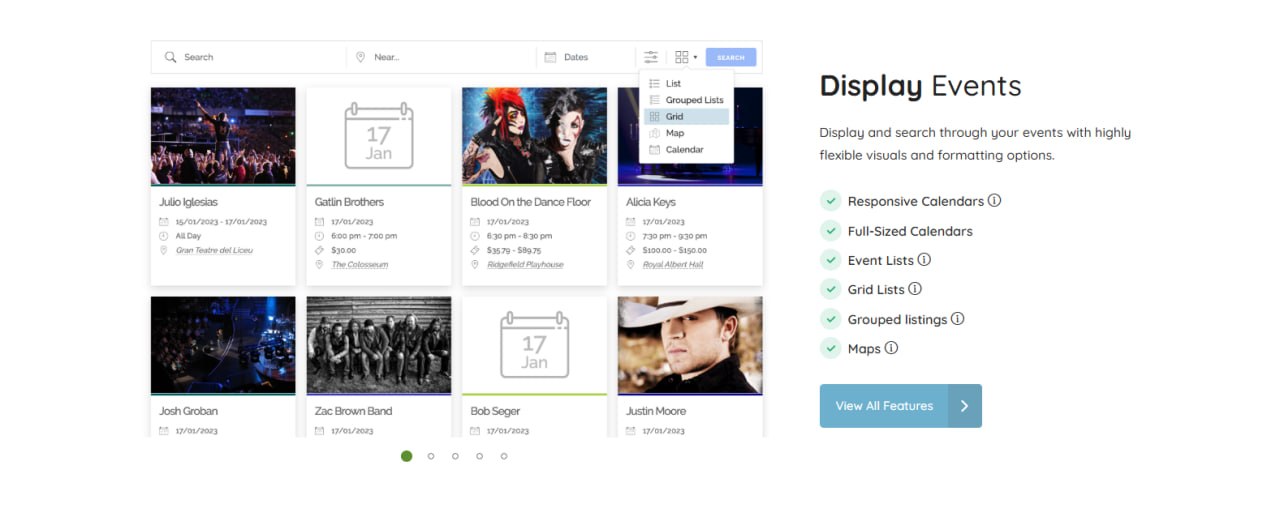
Flexible Event Management: Create, display, search, and manage events with responsive calendars, lists, grids, maps, and multiple display options.
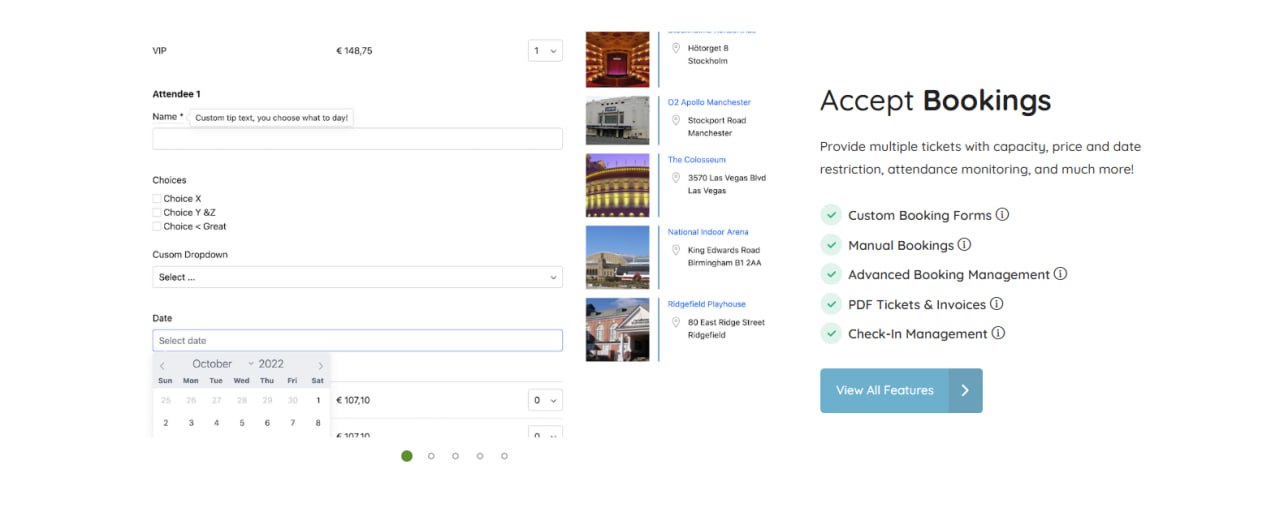
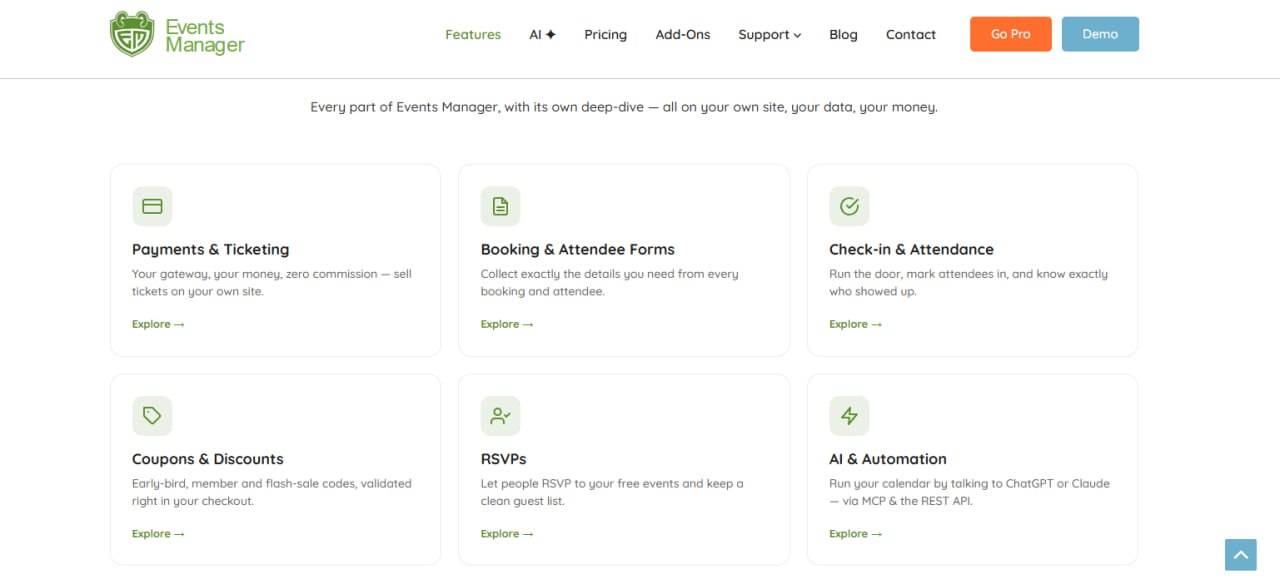
Powerful Booking & Ticketing: Manage bookings, capacity, multiple tickets, payments, PDF tickets and invoices, check-ins, and custom booking forms.
Developer Friendly: Built with flexibility in mind, offering extensive settings, customizable front-end output, placeholders, and hundreds of hooks for developers.
Automation & Integrations: Automate actions based on event and booking activity, send emails, trigger webhooks, and connect with tools such as Zapier, Google Calendar, Google Sheets, WooCommerce, and more.
Established & Actively Maintained: Developed since 2008, with more than 79,000 active sites and 6.3 million downloads.
Events Manager isn't designed to be just a simple calendar display tool; it provides a complete event-management system for WordPress.
From publishing events and managing locations to accepting bookings, processing payments, automating workflows, and managing attendees, it is built to handle the operational side of running events while remaining flexible for developers and site owners.
Visual Insights into Events Manager Plugin:
Potential Limitations
Reviewers describe Events Manager as “aimed more at developers,” with a very full‑featured but complex admin, which can make configuration and customization harder for non‑technical users compared with more guided, UI‑driven rivals.
The plugin’s admin and workflows feel more utilitarian than modern, so brands prioritizing a polished UI may need extra template and CSS work to get front‑end presentation where they want it.
This plugin is a great fit for small businesses, nonprofits, community organizations, and individual event organizers looking for a simple way to manage and display events on their WordPress website.
It’s particularly useful for events such as workshops, classes, meetups, conferences, and community gatherings, where having an organized and easy-to-use event calendar is essential.
With features for creating and displaying events directly within WordPress, Events Manager offers a practical solution for organizers who want to manage their events without unnecessary complexity.
While it may not offer the extensive feature set of some premium all-in-one event management platforms, its straightforward approach makes it a solid choice for users who need a reliable WordPress event calendar without a steep learning curve.
Calendarize it! is a highly user-friendly and feature-rich WordPress event calendar plugin, offering easy customization through Visual Composer and a range of pre-built designs. With its affordable pricing and standout features like the Visual CSS Editor and reliable support, Calendarize it! proves to be a valuable tool for developers and designers seeking efficient event calendar solutions.
Potential Limitations
Official documentation shows that important capabilities like Ratings & Reviews, social‑login integration, and some RSVP behavior depend on separate add‑ons, meaning the effective cost and complexity can grow quickly.
It is heavily oriented toward WPBakery; Elementor and block‑editor users are warned to expect shortcode‑based workflows rather than native builder widgets.
Event Espresso emerges as a versatile and revenue-generating WordPress event calendar plugin, suitable for a wide range of event organizers. By seamlessly integrating event submission and registration functionalities, Event Espresso empowers website administrators to easily manage events, set ticket options and prices, and provide a smooth payment experience.
Potential Limitations
Capterra users complain that the front‑end display is “awkward and hard to make changes to,” and that they “could not get it to look like the showcase samples unless they hired a professional developer.”
Several reviews describe the pricing as high and fragmented, with essential capabilities pushed into paid add‑ons, creating a sense of being “nickel‑and‑dimed.”
Timely All-in-One Events Calendar is a powerful and cloud-based WordPress event calendar plugin built for scalability and ease of use. With its intuitive interface and robust event management tools, Timely simplifies event creation, scheduling, and promotion while offering built-in social sharing features. Its PosterBoard dashboard and seamless synchronization between the web app and WordPress make Timely a strong solution for organizations managing high-volume or collaborative event calendars.
Potential Limitations
A WordPress.org review states that “every update breaks something new” and that support is “unresponsive or unhelpful at best,” indicating poor release quality and vendor responsiveness.
The reviewer reports that the 3.0.2 update disconnected the plugin from the Timely API, causing all saved events to vanish from the site.
Event KOI is a lightweight and modern WordPress event management plugin designed to simplify the process of creating and displaying events. With a clean interface and essential event features, Event KOI enables users to manage events efficiently without unnecessary complexity. Its focus on simplicity, performance, and ease of setup makes it a suitable option for users seeking a straightforward event calendar solution.
Potential Limitations
A comparative review notes “limited flexibility” and “post type lock‑in,” because EventKoi requires its own native event post type and doesn’t work with existing content types, restricting integration with custom workflows.
Flags “expensive long‑term” pricing and an immature ecosystem with no fully established free edition yet, making EventKoi a higher‑risk, higher‑cost choice.
Event Organiser provides a comprehensive solution for creating and managing events in WordPress, offering a user-friendly interface and extensive functionalities. With its high popularity and positive reviews, Event Organiser is a reliable choice, translated into multiple languages. While the free version offers features like venue creation, calendar display, and event import/export, the Pro version provides advanced capabilities such as event search, booking, and payment gateways, making it a versatile tool for organizing events effectively.
Potential Limitations
The WordPress.org review index includes topics like “Not compatible with latest WordPress Version and PHP 8.x,” indicating lagging compatibility with newer PHP/WordPress stacks in at least some releases.
Other review threads explicitly warn “Full of bugs and no support,” pointing to long‑standing concerns about reliability and responsiveness.
My Calendar has a free core, while My Calendar Pro costs $69 per year for three sites. It handles recurrence, venues, categories, and frontend submissions; ticketing uses the separate My Tickets product. Compared with Events Manager, it is simpler and more accessibility-led, but less complete for native bookings, commerce, and organizer operations.
Potential Limitations
In the WordPress.org support forum, there are threads about recurring functional bugs: users report events being marked “invalid” and not displayed, difficulty deleting specific dates from recurring series, and broken media‑to‑event relationships.
These bug reports often appear on recent versions and require manual intervention or workarounds, suggesting that while the plugin is actively maintained, its recurrence and data‑handling logic can still be brittle.
Sugar Calendar offers a streamlined editor, recurrence, blocks, Elementor widgets, feeds, and paid ticketing that make it suitable for publishers and small businesses. Basic is promoted at $49.50 per year. WooCommerce, frontend submissions, RSVP, and automation depend on plan or add-ons, so the entry price may not represent the final stack.
Potential Limitations
Capterra reviewers repeatedly note that Sugar Calendar is “missing a lot of features that you can get from The Events Calendar,” so teams needing advanced recurrence rules, complex views, or a large ecosystem may hit functional ceilings quickly.
Several reviews wish the front‑end calendar/list views were “a little more styled” or “more dynamic and modern,” meaning you’ll likely need custom CSS or templates to reach the same visual polish.
Why Do You Need an Events Calendar Plugin?
Managing events can become complicated, especially when juggling multiple dates, attendees, and ticketing options. WordPress users are in for a treat: they can simply use an events calendar plugin and get a head start.
If you’re not using an events calendar plugin, organizing your events may have involved manually tracking schedules, creating individual event pages, and handling RSVPs or ticketing separately.
This fragmented approach is time-consuming and increases the chances of errors, such as double bookings or miscommunicated details.
Additionally, it’s difficult to provide a seamless experience for visitors who are looking for event information quickly and efficiently.
Events calendar plugins centralize all your event details in one place.
This means you can easily create, edit, and manage events directly from your WordPress dashboard. With features like recurring events, custom event categories, and automated reminders, these plugins save you hours of manual effort.
A well-designed calendar makes it simple for visitors to find the events they’re interested in. Many calendar plugins offer stylish layouts, filterable calendar views, and responsive UI.
For example, users can search events by date, category, or location, ensuring quick and easy access to relevant information.
Other key features in an events calendar plugin include RSVP forms, ticketing/booking, map location, and social media share buttons to make it easier to promote events. Most event calendar plugins also offer email notifications and countdown timers to keep the audience informed and engaged.
Seamless integration with third-party tools like Google Calendar, Zoom, and alternative payment gateways allows you to cast a wide net on the type of events you can host. This reduces the need for separate solutions and keeps your workflow efficient and cohesive.
To top it off, many WordPress calendar plugins are optimized for search engines which improves your site’s visibility in search results, increasing the chances that people will discover your events online.
So whether you’re running a small community meetup, managing corporate events, or promoting large-scale conferences, choosing the right WordPress events calendar plugin can transform your workflow and deliver a professional experience for both organizers and attendees.
Key Features to Look for in the Best WordPress Event Calendar Plugins
When choosing a perfect event calendar plugin for your WordPress site, you need to look for features beyond user-friendly interface and attractive layout. Here's a rundown of the most important features to look out for in the ideal calendar plugin:
Event Creation and Management
The right events calendar plugin should be easy to set up and use with regard to the event creation and management.
Event pages with descriptions and widgets should include any detailed information you may want to add.
Mobile Responsiveness and Ease of Use
Since phones contribute to more than half of web traffic, mobile responsiveness is non-negotiable. An ideal plugin should be beautiful on different-sized screens and easy for the users to navigate.
It should also ensure that the plugin is featured with a user-friendly dashboard that can be set up within minutes with little training needed.
Ticketing, RSVPs, and Payment Integration
When it comes to ticketing and RSVP features for monetized or limited-capacity events, they are seriously essential.
A plugin that supports popular payment gateways like PayPal or Stripe or better yet WooCommerce leads to minimal issues in dealing with transactions.
A well-thought-out RSVP tracking and attendee management section will keep you organized and help your events run smoothly.
Recurring Events and Automation
If you host weekly classes, monthly meetings, or annual conferences, then you will greatly appreciate being able to set them once and forget about them.
Automating future event dates makes sure you save on time and your calendar events update uniformly.
Alongside that, automated notifications will keep your audience informed without the need for manual follow-ups.
Search, Filters, and Customization Options
Sophisticated search and filter options in a plugin let visitors quickly find relevant events according to date, category, or location.
Customization and styling options allow you to tailor the calendar’s appearance to match your website’s design.
Looking for these features to make a judgement call on your plugin of choice will not only simplify event management but also provide an engaging experience that boosts attendance and streamlines operations.
What Features Should You Compare?
After defining the requirements, compare how the four products deliver them together.
A checkmark does not show whether recurrence, submissions, bookings, payments, reports, and design tools share one event model or require several products.
MEC creates fewer workflow handoffs than the alternatives.
Feature breadth: MEC covers more of the publishing, booking, ticketing, reporting, and visual-design workflow than calendar-first rivals.
Ecosystem cohesion: MEC keeps capacity, attendees, payments, reports, and recurring events more closely connected than TEC or EventON.
Integration depth: MEC extends the same event records through WooCommerce, Google Calendar, Elementor, Zoom, email, and automation options.
Support accessibility: MEC offers a knowledge base plus chat, email, and tickets. TEC checks its free forum about weekly and targets 24-48 business hours for paid tickets; recent transition feedback reports inconsistent access and responses.
Upgrade path: MEC add-ons extend one ecosystem, reducing replacement and migration risk, although required extensions must be priced.
Total ownership cost: Include plans, add-ons, renewals, site limits, fees, and maintenance. EventON starts lowest, TEC highest, and MEC offers the strongest middle-ground value.
Choose the plugin that minimizes operational gaps, not the one with the most isolated checkmarks.
MEC leads when feature breadth, integration cohesion, design flexibility, and reachable support are evaluated together.
Premium software is justified when failed payments, inaccurate capacity, or slow support have a measurable cost.
Compare the full first-year and renewal price, including add-ons, fees, license limits, and data portability.
Why Choose Modern Events Calendar?
Modern Events Calendar (MEC) is the strongest overall option here for teams needing rich presentation and a built-in booking path without enterprise-level entry pricing.
MEC Lite includes recurrence, views, and submissions; Pro adds booking, while add-ons cover WooCommerce, invoices, seating, reporting, and visual builders.
MEC also fits Elementor-led sites because dedicated event and shortcode builders provide more control than generic shortcode placement.
The caution is add-on scope: map required commerce and builder features, then compare the total MEC stack with competing plans.
Switching from another plugin? Bring your events with you.
Switching to Modern Events Calendar is easy: import all events and content in seconds from:
MEC is the best overall choice for flexible layouts, recurrence, submissions, and booking in one ecosystem. Amelia is stronger for appointment-led businesses, while The Events Calendar better suits organizations prioritizing a large bundled ecosystem.
Which plugin is the most affordable option in the comparison?
Among the four primary candidates, EventON has the lowest paid core price at $50 one-time. However, ticketing alone is $120 per year and other operational functions use separate add-ons. MEC’s $99 annual starting point is usually more cost-efficient when integrated booking, submissions, design options, and direct support are needed together.
Which plugin is best for booking and ticket sales?
MEC offers the best balance of calendar display, booking, and ticketing at its starting paid price. Event Espresso is stronger for registration records and check-in; Amelia is better for appointments.
Which plugin is better for recurring events?
Several plugins support recurrence, but depth varies. Compare exceptions, editing individual occurrences, multi-day rules, booking behavior, and plan level. MEC is strong when recurrence must connect to booking and multiple views.
Which plugin offers the most layout flexibility?
MEC provides broad layout flexibility through skins, shortcodes, templates, blocks, and Elementor builders. EventON and Stachethemes are visual alternatives; Pie Calendar is useful for displaying existing post types.
Do these plugins support payment integrations?
Many support payments directly or through WooCommerce, but plan levels differ. Confirm gateways, currencies, taxes, refunds, transaction fees, and renewal requirements before purchase.
Our Verdict
Best Overall: Modern Events Calendar (MEC)
MEC offers the strongest overall balance of event-display flexibility, recurring-event management, frontend submissions, booking capabilities, integrations, design control, and accessible support.
Its $99 annual starting price makes it a strong choice for organizations that need a connected event-management platform without paying for a larger, more complex product bundle.
Businesses should still include any required commerce, reporting, or Elementor add-ons when calculating the total cost.
Amelia is the better choice for businesses selling scheduled workshops, courses, classes, and group sessions.
Its strengths lie in customer booking, staff and location management, availability, payments, and appointment-style workflows rather than large public event calendars or community submissions.
Best for Unique Design and Simplicity: EventON
EventON is ideal for sites that prioritize attractive, modern event cards and straightforward calendar presentation.
Its core plugin offers strong visual value at a low initial price, but ticketing, frontend submissions, RSVP tools, and booking features require separate add-ons that can significantly increase the total cost.
Best for Community Event Aggregators: Events Manager
Events Manager is the strongest option for community calendars, associations, directories, and websites that accept events from multiple organizers.
Its free core includes extensive recurrence, frontend submissions, locations, bookings, approvals, and attendee-management features.
The trade-off is a denser interface and a less polished design experience than MEC or EventON.
Not Recommended: The Events Calendar (TEC)
Although The Events Calendar has a mature ecosystem and broad product range, we do not currently recommend it as the best-value option.
Its paid plans begin at a substantially higher price, important workflows are distributed across multiple products or plan levels, and recent reports of inconsistent support make the overall ownership experience less predictable.
For most organizations, MEC is the strongest overall choice because it combines flexible presentation, recurrence, submissions, booking, integrations, and support within a comparatively cohesive ecosystem.
The final decision should be based on the complete workflow cost, including required add-ons, renewals, payment tools, and support, not simply the advertised entry price.
Ready to run your events with MEC?
From $99/year · One year of premium support · 30-day money-back guarantee
We use cookies to improve your experience. By visiting our website, you agree to our processing of information as described in Webnus’s privacy statement.
For more information, please review your cookie preferences options.




 The Events Calendar
 Eventin
 Amelia
 EventON