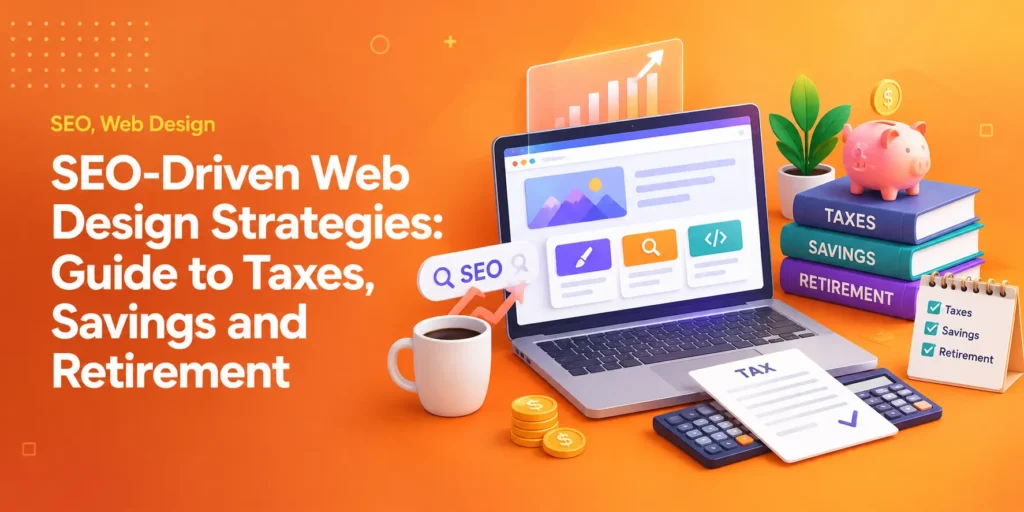
Both Search Engine Optimization (SEO) and website design are factors, in the success of any business operating in the realm. SEO works to enhance the visibility of a website by boosting its ranking on search engine results pages (SERPs) thus drawing in targeted traffic.
Designing websites for a living takes a particular mix of skills: visual judgment, technical know-how, patience with clients, and the discipline to ship on deadline.
Managing money is rarely on that list, yet it shapes every part of a design career. Income that arrives unevenly, taxes that nobody withholds, and retirement plans that nobody sets up on your behalf all add up to a financial life that works very differently from a salaried job.
The good news is that none of this is mysterious. It mostly comes down to a few habits, set up early and kept consistently. This guide walks through taxes first, then savings, then retirement, because each one builds on the one before it.
By optimizing content keywords and technical elements SEO ensures that the website attracts visitors who’re likely to become customers.
On the hand, web design focuses on creating appealing and user-friendly websites. A crafted site improves user experience builds trust and encourages visitors to explore the content.
The interplay between SEO and web design is clear as they complement each other.
While a stunning website may struggle to attract traffic without SEO optimization, a site, with SEO but lacking in design quality may encounter difficulties retaining visitors and converting leads.
Ultimately SEO services and web design collaborate to ensure a website not only ranks well but also provides a user experience leading to increased visibility, traffic, and conversions online.
In the ever-evolving digital ecosystem, having a stunning website is just the beginning.
With billions of searches conducted daily on search engines like Google, Bing, and Yahoo, ensuring your website stands out amidst the noise is paramount.
This is where the concept of optimizing web design for search engines, commonly known as SEO (Search Engine Optimization), becomes indispensable.
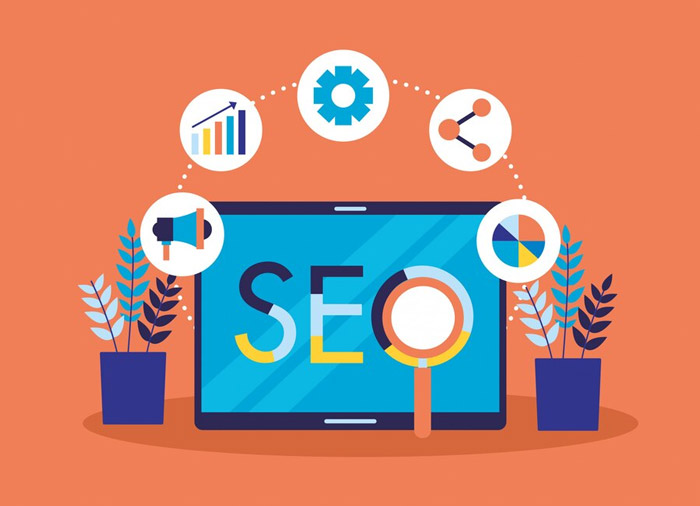
Optimizing web design for search engines involves a strategic approach to designing and developing websites that not only appeal to human users but also meet the criteria set by search engine algorithms.
It’s about creating a harmonious balance between aesthetics, functionality, and technical elements to enhance visibility, drive organic traffic, and ultimately achieve business objectives.
In this digital age, where competition is fierce and attention spans are fleeting, businesses cannot afford to overlook the importance of SEO in their web design endeavors.
By embracing SEO principles from the outset of the design process, companies can ensure their websites not only look visually appealing but also rank well in search engine results pages (SERPs), thereby maximizing their online presence and reaching their target audience effectively.
Why a Design Income Needs Its Own Playbook
Before getting into specific tactics, it helps to understand why standard personal finance advice often falls short for designers. Most of it assumes a steady paycheck. Yours probably isn’t.
Uneven Pay Changes the Math
A designer might land a large site rebuild in March, collect nothing in April, and then juggle three small retainers through the summer.
Averaged across a year, the income may be solid. Month to month, it swings. Budgeting based on your best month leads to trouble. Budgeting on your worst month keeps you safe but can feel needlessly tight.
The workable middle ground is to budget from a realistic monthly baseline and treat anything above it as money with a job to do.
Nobody Is Holding Money Back for You
An employer quietly sends part of each paycheck to the government. When a client pays your invoice in full, that full amount lands in your account, and it’s easy to mistake it for spendable money.
It isn’t. A meaningful slice of it already belongs to the tax authorities, and that fact drives almost everything in the next section.
Getting Taxes Right as a Self-Employed Designer
Taxes are where freelance designers most often get caught off guard. The fixes are simple once you know where the surprises come from.
The Self-Employment Tax
In the United States, employees split Social Security and Medicare taxes with their employer. Freelancers pay both halves. The IRS explains that the self-employment tax rate is 15.3% on net earnings, and that comes on top of regular income tax.
This is why a designer who clears a healthy profit can still owe a surprisingly large bill. Many freelancers set aside 25% to 30% of every payment as a starting point, then adjust once they see their real numbers after the first year.
Paying Every Quarter
Waiting until April to pay the whole year’s tax usually isn’t allowed. If you expect to owe a certain amount, the IRS expects estimated tax payments spread across the year, typically due in April, June, September and January.
Missing them can trigger penalties. Put the dates in your calendar right next to client deadlines. They deserve the same respect.
Deductions Designers Tend to Miss
Your tools are business expenses. That includes design software subscriptions, font licenses, stock photo and icon packs, hosting for your portfolio site, domain renewals, a share of your phone and internet bills, and the courses you take to learn a new framework.
A dedicated home workspace may qualify too. Hardware counts as well, whether that’s a new monitor or a drawing tablet.
Keep receipts in one folder, digital or physical, and log expenses monthly rather than reconstructing a year of purchases from bank statements in a panic. Deductions lower your taxable profit, which lowers both your income tax and your self-employment tax.
Building Savings That Hold Up in Slow Months
Once taxes are handled, the next job is making sure a quiet stretch doesn’t turn into a crisis. Good savings for a designer is less about thrift and more about structure.
Split Your Money Into Separate Accounts
One practical setup uses three accounts. Client payments land in a business account. A fixed percentage moves right away into a tax account that you never touch except to pay the IRS.
Then you pay yourself a regular amount into a personal account, like a salary. The business account becomes a buffer that absorbs the ups and downs, so your personal spending stays steady even when invoices don’t.
Size Your Emergency Fund for Gaps, Not Just Accidents
Salaried workers are often told to keep three to six months of expenses on hand. Freelancers should lean toward the higher end, or beyond it.
Your emergency fund isn’t only for a broken laptop or a medical bill. It also covers the client who pays 60 days late, the project that gets cancelled halfway through, and the slow season many designers see around the holidays.
Build it gradually from your above-baseline months.
Why Good Financial Planning Matters for Designers
Taxes and savings handle the near term. Planning is what ties them to the longer view, and it matters more for freelancers than for almost anyone else.
With no HR department, no automatic payroll deductions and no company match, every decision rests with you. That freedom is real. So is the risk of drifting, year after year, without a clear sense of whether you’re on track.
A written plan changes that. It sets your tax percentage, your salary amount, your savings target and your retirement contribution, and it tells you what to do with a windfall month before one arrives.
Designers already think this way about their work. You wouldn’t start building a site without a sitemap or a style guide, and your finances deserve the same groundwork.
Some people work through these questions with a human advisor, while others start with tools built for AI financial planning to test scenarios, like what happens if income drops by a third or a big contract comes in early.
Whichever route you take, revisit the plan at least once a year. Your rates, your clients and your goals will shift, and the plan should shift with them.
With a plan in place, the last piece is retirement, where small choices made now have the largest long-term effect.
Retirement Options When You Are Your Own Boss
Leaving a job often means leaving a 401(k) behind. Self-employed designers have strong options of their own, and in some cases they allow bigger contributions than an employer plan would.
The SEP IRA
A SEP IRA is easy to open and easy to run. You contribute a percentage of your net self-employment earnings, and there is no requirement to contribute every year.
That flexibility suits a designer whose income swings. A lean year means a smaller contribution or none at all. A strong year lets you put away much more.
The Solo 401(k)
For designers who work alone with no employees, a one-participant 401(k) is often the more powerful choice. You contribute both as the “employee” and as the “employer,” which can let you save more at moderate income levels than a SEP IRA allows.
Many providers also offer a Roth version, where you pay tax now and withdraw tax-free later. The paperwork is slightly heavier, but for a designer earning steadily, the extra room can be worth it.
A Roth IRA on the Side
A Roth IRA can sit alongside either plan, subject to income limits. It adds tax diversity to your savings, which gives you more choices about how to draw money down in retirement.
Bringing It Together
Running a design business means wearing more hats than the job title suggests, and managing money is one of the most important. Setting aside taxes as income arrives, giving savings a clear structure, keeping a plan that gets reviewed and updated, and choosing a retirement account that fits a self-employed life all work together.
None of these steps is difficult on its own. The value comes from doing them consistently, so that the business you’ve built supports you not just this year, but for decades to come.
SEO-Driven Web Design Strategies: Driving Organic Traffic to Websites
In the competitive world of the internet being visible is crucial, for success. With websites competing for attention standing out can be quite a challenge.
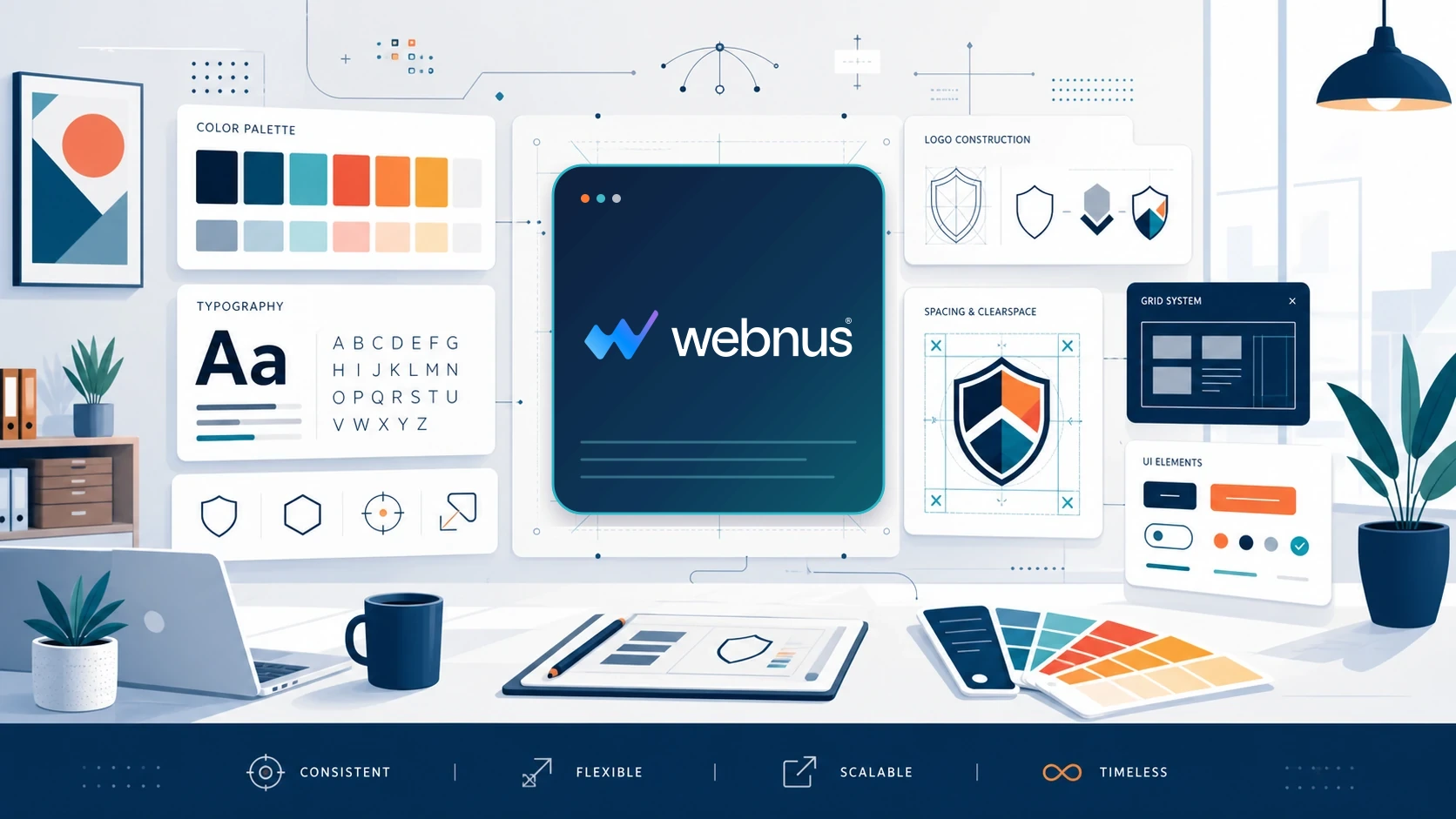
This is where SEO (Search Engine Optimization) comes into play as a tool for driving traffic to websites.
Boosting Visibility; SEO plays a role in enhancing a website’s presence on search engine results pages (SERPs). By optimizing aspects like content, meta tags, headings, and URLs SEO helps search engines better comprehend and index web pages thus improving their chances of appearing in relevant search queries.
Targeted Audience; Unlike paid advertisements that target users based on demographics or interests organic traffic generated through SEO is more specific in nature. This is because it arises from users actively looking for information, products, or services related to keywords or topics. Consequently, organic traffic typically consists of users who are more likely to convert into customers or engage with the content.
Credibility and Reliability; Websites that rank higher in search results are often viewed as credible and reliable by users. This perception stems from the fact that search engines like Google employ algorithms to evaluate factors such, as relevance, authority, and user experience when assessing website rankings.
Websites that rank high in search results convey credibility to users building trust and confidence.
Cost Effectiveness; Paid advertising may show results. Demands significant time and resources. On the other hand, SEO presents a budget-friendly approach, for driving website traffic in the long run. Once a website secures positions in search results it can attract visitors without continuous ad costs making SEO a sustainable and economical choice.
Long-Term Growth; Unlike lived traffic spikes, from marketing strategies, SEO offers lasting benefits. By enhancing a website’s SEO performance businesses can establish an online presence that grows steadily over time. This enduring strategy not only ensures traffic but also bolsters brand visibility and recognition in the digital realm.
Exploration of Design Trends in 2026 and Their Impact on User Engagement
In the changing world of web design, it’s crucial to stay in the game to create captivating and memorable digital experiences.
As we step into 2026 designers are embracing trends that not only draw in audiences but also boost user interaction and satisfaction.
Immersive Experiences; Thanks to advancements designers are increasingly focused on developing experiences that blend the digital and physical realms. Techniques like augmented reality (AR) virtual reality (VR) and 3D graphics are used to immerse users in environments. Web design firms are leading the way in this trend by using state-of-the-art tools and technologies to create websites that make an impact on visitors.
Dark Mode Design; Dark mode design has become a trend recently offering a modern alternative to traditional light interfaces. By reducing eye strain saving battery life and providing a look dark mode design has garnered widespread appeal, among users. Web design companies are adopting this trend by incorporating mode options into their website designs allowing users to personalize their browsing experience while boosting user engagement at the time.
Sustainability and Environmentally Friendly Design; With the increasing awareness of issues designers are incorporating sustainability principles into their work more, than ever. Web design firms are focusing on using eco materials and optimizing energy use to align with conscious practices in their design process. By demonstrating their dedication to sustainability these companies not only appeal to clients who value responsibility but also connect with users who prioritize ethical and eco-friendly brands leading to enhanced user engagement and loyalty.
Flexible Design; In a time where personalization’s key users expect customized experiences that cater to their preferences and requirements. Web design companies are meeting this expectation by implementing adaptable design methods that adjust content and layouts dynamically based on user actions, demographics, and preferences. By providing content tailored to the users context personalized design boosts user engagement levels. Promotes deeper interactions, with websites.
Voice User Interface (VUI) Design; The increasing popularity of voice-activated devices and virtual assistants has made voice user interface (VUI) design a trend in 2026. Web design firms are exploring ways to incorporate voice interaction into their websites allowing users to navigate search for information and engage using natural language commands.
VUI design improves accessibility, convenience, and engagement, for users, with disabilities or limited mobility by offering a hands intuitive user experience.
Conclusion
To summarize, the design trends of 2026 are pushing the limits of creativity and innovation. They emphasize crafting immersive experiences, adopting dark mode design, prioritizing sustainability, personalizing user interactions, and integrating voice user interfaces.
Web design firms are pivotal in shaping these trends, using them to enrich user engagement, satisfaction, and loyalty online.
By embracing these shifts and staying abreast of changing user desires, these companies can develop captivating digital experiences that deeply connect with audiences and yield significant results.