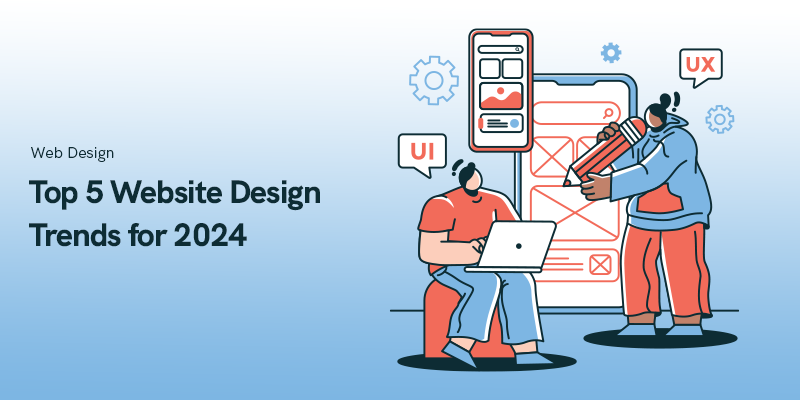
With technology advancing at high speed, websites are becoming more intuitive, visually appealing, and user-friendly than ever before.
Whether you’re an entrepreneur trying to strengthen your online presence or a designer looking for fresh ideas, this article walks through five website design trends that are shaping sites in 2026, plus a few practical notes on using them without hurting speed or accessibility.
5 Website Design Trends to Know in 2026
One quieter shift that rarely makes trend lists is the closer integration of database monitoring into the design process.
Recognizing the importance of a well-maintained and efficient database, designers are now incorporating real-time monitoring tools into their workflows.
This strategic move not only enhances the user experience by ensuring swift data retrieval but also contributes to the overall performance and reliability of the website.
Here are five website design trends that are shaping websites this year:
Color Schemes
Color schemes play a critical role in creating an impactful and visually appealing experience for users. Designers are seeking innovative ways to integrate colors that evoke emotions and leave a lasting impression.
Expect to see bold and vibrant hues dominating websites. Trends such as the use of gradients add depth and dimension to a website’s overall look. These smooth transitions between two or more colors create an exciting effect that keeps visitors engaged.
One caveat: bright palettes still need to pass contrast checks. The European Accessibility Act has applied to many businesses selling online in the EU since June 2025, and WCAG 2.2 is the usual benchmark, so test every text-on-gradient combination before it goes live.
Design Layout
The design layout determines how the content is organized and presented to users.
Layouts are getting looser. Instead of rigid twelve-column grids, more sites use modular “bento” sections, asymmetric blocks and cards of different sizes. CSS container queries, now supported in all major browsers, make this much easier because each component adapts to the space it sits in rather than to the whole screen.
Bold typography paired with a minimalist layout is still one of the most common combinations. Large, confident headings and clean lines create a striking effect without extra decoration.
This approach not only enhances readability but also adds a touch of elegance to the design.
Interactive Elements
Gone are the days of static websites that simply display information. Users now expect a dynamic and engaging online experience.
Interactive elements can take many forms, from animations to scroll-triggered animations and instances such as sliders.
These features not only capture users’ attention, but also encourage them to explore further and spend more time on your website.
Parallax scrolling is another interactive element, where different layers move at different speeds as you scroll down the page. This creates a sense of depth and adds visual interest to your website.
Additionally, implementing hover effects can make your site feel more interactive by providing immediate visual feedback when users hover over buttons or images.
Scroll-driven animations are worth a look too. Effects that used to need a JavaScript library can now be built with CSS alone in modern browsers, which keeps pages lighter. Keep them subtle and respect the “reduce motion” setting, because heavy motion hurts accessibility and can drag down your Interaction to Next Paint (INP) score.
These subtle hover effects can guide users’ actions and improve overall navigation on your site.
Hyper-Minimalism
Hyper-minimalism is a website design trend that focuses on removing unnecessary elements and creating a clean, simple, and clutter-free user experience.
The use of negative space is key, with empty areas intentionally left blank to create visual balance and allow important content to stand out.
Hyper-minimalist websites often choose clean and simple fonts. Large headings with plenty of white space around them make text easy to read and understand at a glance.
AI-Generated Designs
With advancements in Artificial Intelligence, designers are now able to utilize machine learning algorithms to create unique website layouts.
AI-generated designs can analyze vast amounts of data and identify patterns that humans can’t.
This allows for a more personalized user experience tailored to individual preferences. By understanding user behavior and preferences, AI can generate highly targeted designs that engage users from the moment they land on a website.
In practice, most teams now treat AI as a starting point. Design tools and WordPress page builders can turn a short prompt into a first layout in minutes. That draft still needs a designer’s eye for brand, hierarchy and accessibility, but it shortens the road from idea to first version considerably.
Endnote
The world of website design continues to evolve and innovate.
From interactive details to AI-assisted layouts, the trends above can help your site feel current in 2026. Pick the ones that suit your audience instead of chasing all five at once; a fast, readable site still beats a flashy one.
Remember, staying updated with website design trends is essential for businesses looking to make an impact online.