Let’s get right to it: the spam folder is the bane of cold outreach senders and marketers. Email marketers pour time, energy, and resources into crafting the perfect email only to find out later on that their campaigns are all landing in the spam folder.
The fix isn’t better subject lines or optimizing segments or choosing a different sending schedule. The fix is email warmup, a process that builds and establishes sender reputation gradually.
When senders have a good reputation with Email Service Providers (ESPs), providers are able to verify their legitimacy and trustworthiness. The result? Email campaigns have a much better chance of bypassing spam filters and landing in inboxes.
Why spam folders kill your campaigns
Spam filters from Gmail, Outlook, and Yahoo are getting more and more advanced. Additionally, these ESPs have also become stricter when it comes to guidelines for high-volume senders.
When it comes down to it, providers just want to protect their users from potential spammers or suspicious senders.
So when new domains or previously inactive ones suddenly send thousands of messages, ESPs treat this as suspicious behavior. For example, this report on the science behind warming up new domains emphasizes that without proper email warmup, even great content can fail.
Email warmup flips the script. By slowly increasing your sending volume while maintaining good engagement rates (opens, clicks, responses), you’re letting mailbox providers know you. It’s all about building trust. When you launch your sales or marketing campaigns to your bigger lists, your inbox placement rates are almost guaranteed.
The email warm up playbook: A step by step guide to preparing your domain for large-scale campaigns
Here’s your no-fluff roadmap to guide you through how to conduct a proper warm up email strategy.
- Audit your setup and infrastructure. Check domain authentication, especially your SPF, DKIM, and DMARC records. An email health audit can give you a look into the status of these records right away.
- Create a segment of engaged contacts. This segment should be composed of your most active recipients or contacts whom you can count on to open your emails, read them, and possibly even reply. Some marketers choose to create these segments via their email marketing platform (ex. recently opened email in the last 30-60 days). Others choose to manually create lists composed of colleagues or partners in the industry.
- Start slow. Unfortunately, proper warmup has no shortcut. Start by sending around 10-15 emails per few days while keeping an eye on your open rates.
- Gradually ramp up sending volume. Increase your sending volume per day while monitoring inbox placement and open rates. If your open rates dip suddenly or bounce rates increase, go back to sending fewer emails until your engagement metrics stabilize.
- Track and tweak accordingly. Dashboards show opens, clicks, spam scores. Hit 22%+ open rates? Scale. Still slipping? Pause and diagnose.
How AI-powered email warmup tools are revolutionizing the process
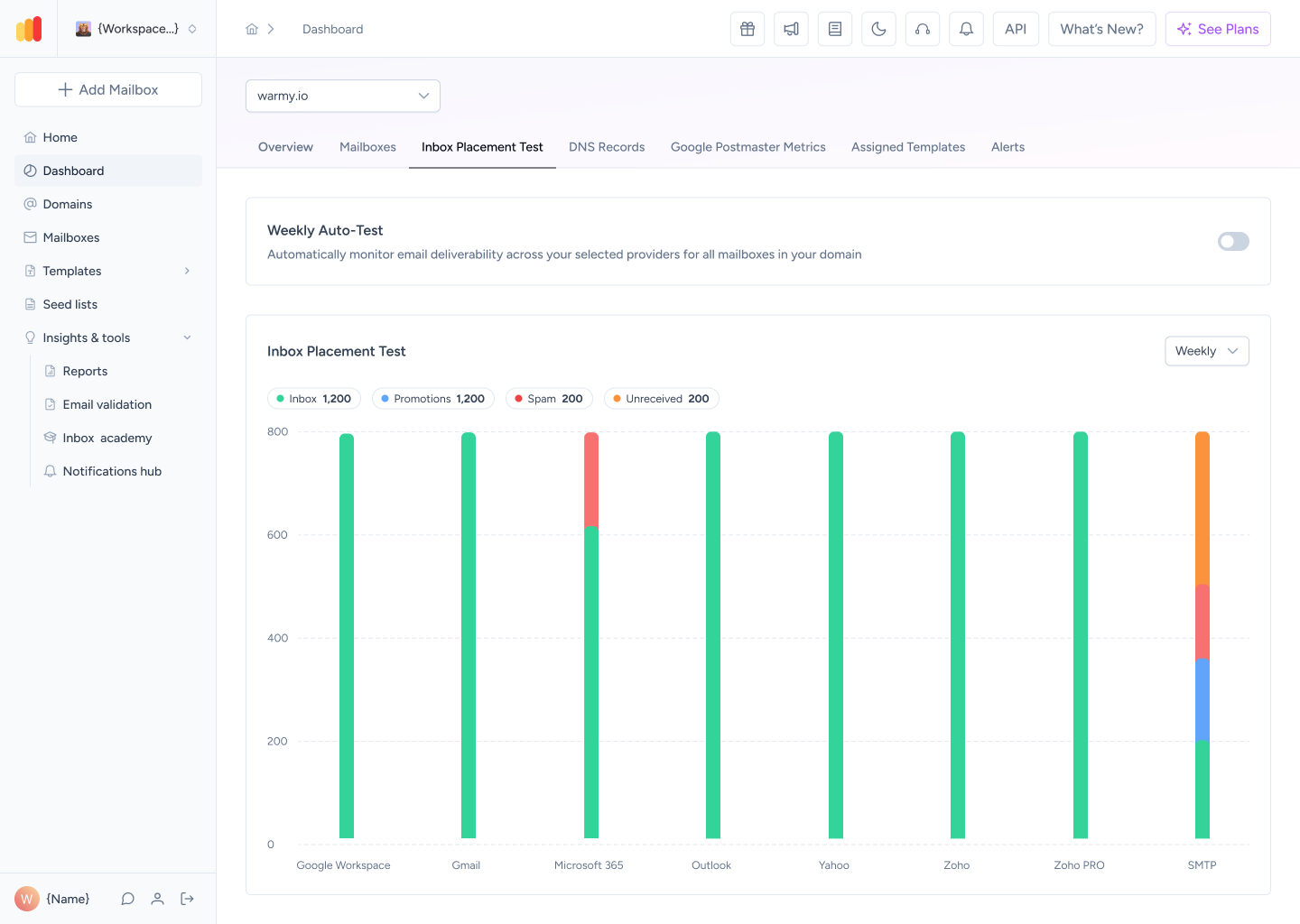
It’s true that email warmup cannot be skipped. It has no shortcut either. However, thanks to AI, email warm up tools like Warmy can take over the manual work involved in this process.
Here are just some examples of how these tools can help:
- Automatically sends warmup emails to a network of trusted and genuine email addresses which simulate interactions like opening emails, reading emails, removing emails from spam and marking them as important. Consistent engagement signals like these send positive feedback to mailbox providers.
- Adjusts sending volume automatically depending on real-time data. For example, if engagement lowers or spam rate rises, the email warm up tool scales back to protect sender reputation without needing manual intervention.
- Provides easy access to data and analytics like domain health, DNS records’ status, inbox placement across different service providers, and spam rates.
- Monitors presence of domain on blacklists, so senders can begin the delisting process right away before any long-term deliverability damage.
- More advanced tools like Warmy even provide customization options for the warmup emails, such as topic, engagement pattern (B2B vs B2C), language, and even percentage of warmup emails that go out to each provider.
Prioritize email warmup and say goodbye to the spam folder
When you prioritize email warmup, you’re not just building a great sender reputation. You’re also moving towards higher inbox placement, higher open rates, higher reply rates, and ultimately—more leads.
For modern marketers, including AI-powered warmup tools like Warmy in their tech stack is now a best practice and go-to strategy for securing high email deliverability rates.
Don’t let spam folders steal your leads. Take the first step by trying Warmy’s email deliverability test to see if your domain is ready for your next big campaign.
Today, businesses are using modern marketing methods such as Instagram influencers, bots, and social media campaigns to capture an audience.
But these tactics shouldn’t distract you from one of the traditional yet effective marketing channels like emails.
With so many other ways to reach out your target audience, why should you be relying on email marketing?
Did you know that you’ll receive a 6 times higher click-through rate from email? Or that more 59% of people agree that marketing emails help them to decide whether to buy or not to buy?
According to HubSpot, more than 80% of marketing experts use email marketing as a strategy to retain customers.
If you want to choose the best email marketing services out there, you should definitely check our comprehensive article out: 20+ Best Email Marketing Services
What Is Email Marketing Exactly?
It is basically a digital marketing strategy where business owners send emails to convert potential prospects into actual customers and maintain relationships with the existing ones.
Step-By-Step Guide to Successful Email Marketing for Beginners
Here are some important steps for you to getting started with email marketing:
Know Its Significance
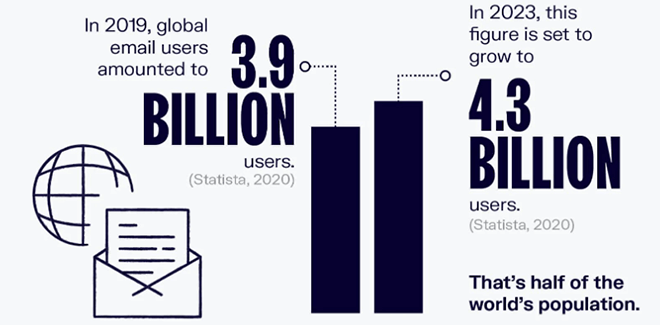
The above-mentioned illustration is quite self-explanatory.
It has been predicted that the number of email users globally are set to grow from 3.9 billion in 2019 to 4.3 billion by 2023. This means that nearly half of the world’s population will be using emails.
Plus, creating brand awareness and informing customers about your latest deals and discounts through emails is cheaper than other methods.
Considering these eye-opening stats, it wouldn’t be wrong to say that email marketing is a great opportunity that small business owners shouldn’t be missing out.
Create an Email List
The first thing you need to do is to set up a well segmented email list.
A lot of companies are doing this. They ask their readers to sign up for emails when they want to access their site. A great option is to make it free (at least for some time). Free trials encourage people to subscribe.
Tell them they can get access to exclusive content for a limited time.
It is also a great tactic to generate paid subscriptions. To ensure the security and deliverability of these promotional emails, it’s important to properly configure DMARC settings, which help protect your domain from email spoofing and phishing attempts, thereby maintaining trust with your subscribers.
Create Catchy Subject Lines
A study revealed that 35% of email users open an email based on the subject line. Plus, 69% of emails are reported as spam by email recipients based on their subject lines.
Following are some of the best practices that email marketers should use while drafting subject lines:
Use Fear of Missing Out (FOMO) Approach
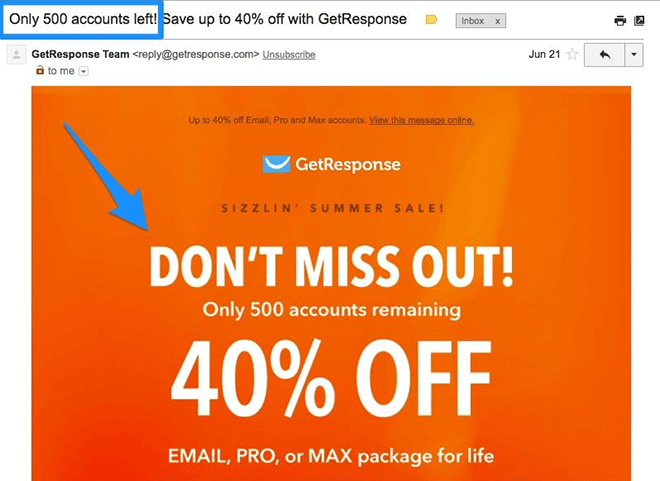
It triggers a deep feeling of fear in humans that they’ll miss out anything. Threatening subject lines (hurry, only 10 tickets left, only 3 hours left, or the offer will expire soon) work well.
Use Emojis
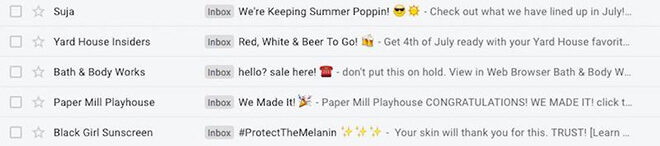
Adding emojis in your subject line is a fun way to engage customers and bring messages to life. Make sure that you don’t add emojis in serious emails and emojis that have double meanings or can offend the recipient.
Personalization Is the Key
According to latest email marketing stats, emails that start from the name of the recipient observer have a high click-through rate than those that don’t.

Modern marketers today emphasize on using subscriber data to create tailored, relevant, and more individualized emails for the recipients.
It not only increases open rates but also help drive revenues up to 760%.
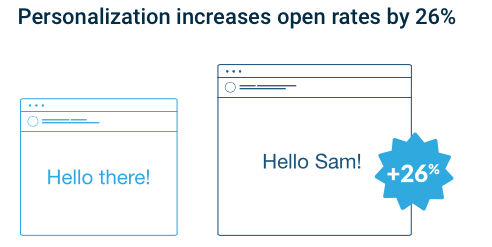
If you don’t have customer data… ask them.
Don’t Forget to Add a Call-To-Action (CTA)
Make sure to create CTA’s for your email campaigns because they make it clear for the readers to take the next step. It can also increase the open rate by 28%. This is one reason why SaaS SEO Marketing has gained a lot of momentum in the market.
If you want to improve your open rates and email deliverability, keep your list clean. Email verification can help you clean the email list and ensures the authenticity and validity of email addresses before sending out email campaigns.
Be careful when you use friction words such as ‘order now’, ‘download the copy’, ‘Call us’. Nobody is interested in taking such orders from you. People would take action when they have a clear benefit.
A good CTA is always actionable. You should tell them clearly what to do. Try to make it look like a button. See an email example from the beauty brand Sephora:
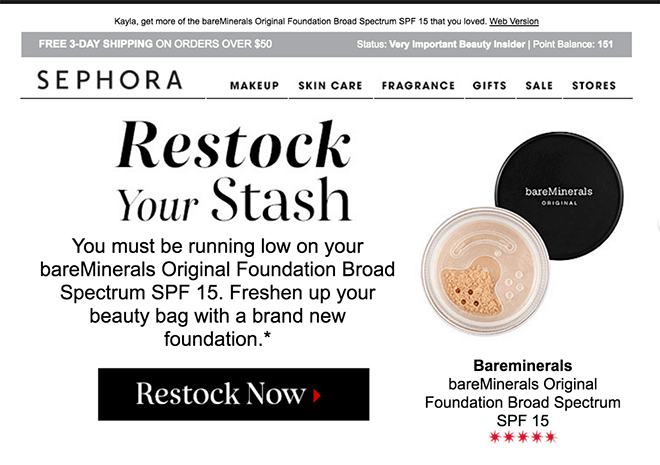
A pro-tip is to ensure that your CTA is congruent with the key message of your email.
Take follow-ups
There are some compelling reasons that’ll motivate you to take feedback and follow-ups from your customers.
Firstly, follow-up emails show that you genuinely care for your customers. It also serves as a reminder that the recipient has to go ahead with the purchase. They’re not only for proceeding sales but used for maintaining relationships with prospects and representing your company.
Here are some must-follow follow-up rules:
- Never send the first follow-up too quickly. Send a follow-up email at least after 4 to 5 days.
- When composing your follow-up start with reminding about the last email.
- Don’t exaggerate. Get to the point quickly.
- Try to use action verbs but refrain from overdoing it.
- Adding a call-to-action in your follow-up emails is important.
Make as Schedule and Stick to It
Did you know sending your emails at the right time can dramatically impact the response rate?
You’ll expect to see better results when you send your emails during the weekdays. This is the time when most people, especially working professionals use emails the most.
Use Analytics
How would you know if your chosen email marketing strategy is working for you?
Contacting the right SaaS Marketing Agency would help. Webmasters must use analytics to trace the performance of emails and find out how successful their campaign is. There are many free and paid tools available for this online.
Some of the tools have their native analytics as well, like Google Analytics, Outlook analytics, and etc.
Set criteria such as the number of emails opened, the number of customers sign up for subscription, or the click-through rate.
In Summary
Email marketing is a great digital marketing strategy in B2C scenario. Regardless of the size of the business, email marketing offers some clear benefits to all. We hope that these fundamental tips and tactics will help beginners to design a great email campaign soon.