How To Increase Modern Events Calendar Load Speed?
Check the Latest Update
First of all, make sure that you have the latest version of MEC. Every release includes performance improvements and compatibility fixes, so running an outdated version is one of the most common causes of slow pages.
Note: MEC is compatible with PHP 5.6 and above and is fully tested with the latest PHP 8.x releases. We strongly recommend running PHP 8.1 or higher on your server. Older PHP branches (5.6, 7.0, 7.1, 7.4) are end-of-life, no longer receive security updates, and are noticeably slower than PHP 8. You can check your current PHP version under Tools → Site Health → Info → Server and ask your hosting provider to upgrade it if needed.
Use the Assets Per Page Feature
Regarding the low speed of your website, you can manage the resources that MEC includes in pages by using the Assets Per Page feature:
- Go to MEC Settings → General Settings → Assets (CSS and JavaScript files).
- Enable Assets Per Page. With this option, MEC stops loading its CSS and JavaScript files on every page of your site.
- Then edit each page where a calendar or shortcode is placed and enable the Include MEC Assets option in the page options (sidebar metabox), so MEC assets load only where they are actually needed.
You can also enable the Load Assets in Footer option in the same section to move MEC scripts from the header to the footer, which improves perceived loading time and Core Web Vitals scores.
Rule Out Plugin and Theme Conflicts
Deactivate all your plugins except MEC, set your theme on a default theme (such as Twenty Twenty-Five), then reload the page. If the issue was solved, activate your plugins one by one, refreshing the page each time, and check which plugin is causing the issue.
Check the Server Configuration (cURL and TTFB)
Make sure that cURL is enabled on your server — WordPress’s HTTP API (which MEC uses for all external requests) relies on it. Your hosting provider can enable it for you.
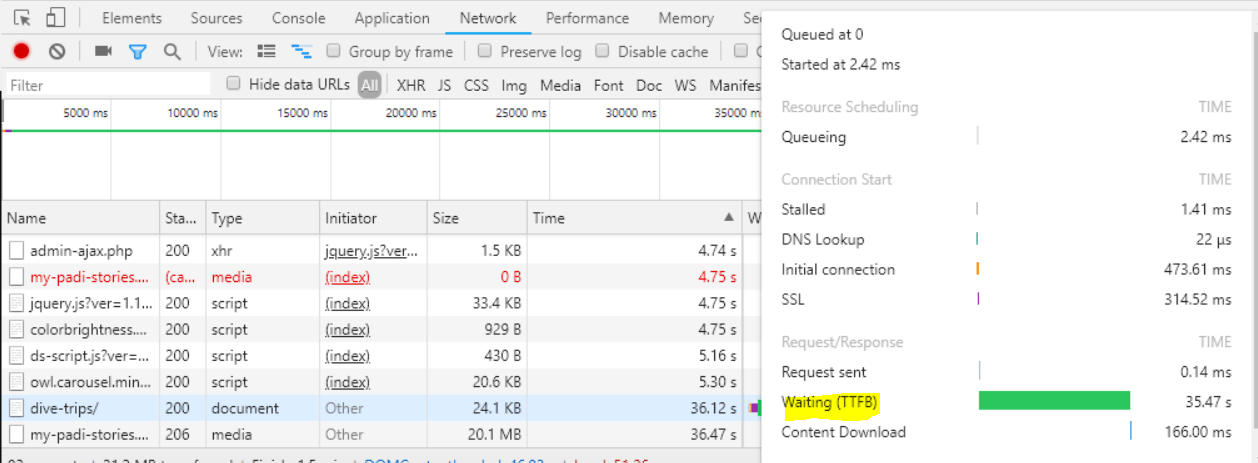
If MEC is not the cause, ask your hosting provider to investigate your website’s TTFB (Time To First Byte). A high TTFB usually points to slow hosting, a lack of server-side caching, or an overloaded database rather than to any plugin.
Use Caching and Optimization
For in-depth speed improvement, combine MEC’s built-in options with standard WordPress optimization:
- Install a caching plugin (LiteSpeed Cache, WP Rocket, W3 Total Cache, or your host’s built-in cache) and enable page caching.
- Exclude MEC’s AJAX endpoints (URLs containing
/wp-admin/admin-ajax.php) from caching, so calendars and booking forms keep working correctly. - Use a CDN (Cloudflare, BunnyCDN, etc.) to serve static files from servers closer to your visitors.
- Minify and combine CSS/JS files, and enable lazy loading for images.
- Keep your WordPress, theme, and all plugins updated.
Test With GTmetrix and PageSpeed Insights
Run your website through GTmetrix or Google PageSpeed Insights to identify exactly what is slowing it down.
Performance report
The performance report includes your grade and Core Web Vitals: LCP (Largest Contentful Paint), INP (Interaction to Next Paint), and CLS (Cumulative Layout Shift).Structure tab
This tab lists actionable issues such as “eliminate render-blocking resources” and “minify CSS” that you should address first.Waterfall chart
The waterfall chart displays every individual request on your page so you can see exactly which request is causing delays.
If after following all steps above a specific request from MEC is still slow, please contact our support team with your GTmetrix report attached.